Difficult conditions
Rain, fog, snow, black ice, darkness, wind: as soon as conditions deteriorate, grip drops, visibility shrinks and braking distances get longer. The Belgian highway code imposes one golden rule: adapt your speed to the circumstances. This lesson sums up the right reflexes for each difficult situation.
📑 In this lesson (6)
The basic rule: adapt your speed
Speed limits set a maximum, never a speed to reach at all costs. As soon as the carriageway is wet or slippery, or visibility drops, you must drive well below the posted limit. The driver must remain in control of the vehicle at all times and be able to stop in front of any foreseeable obstacle.

Driving in the rain
Rain reduces tyre grip and lengthens braking distance. The most treacherous danger is aquaplaning (or hydroplaning): at high speed, a film of water slips between the tyres and the road, the wheels no longer touch the surface and the vehicle becomes uncontrollable. The risk increases with speed, water depth and tyre wear.
- Slow down: it is the only truly effective defence against aquaplaning.
- Double your following distance from the vehicle in front.
- Avoid abrupt movements: sudden braking, acceleration or steering will make you lose grip.
- If you aquaplane, ease off the accelerator, keep the steering wheel straight and do not brake hard until grip returns.
- Switch on your dipped headlights: they make you visible, even in daylight during heavy rain.
Driving in fog
Fog hides obstacles and gives a false impression of driving slowly. The rule is simple: adapt your speed to the distance you can actually see. You must always be able to stop within your field of vision.
Lighting plays a central role. Front fog lights may supplement the dipped headlights. The rear fog light (red, intense) signals your presence to vehicles behind you.
- Switch on your dipped headlights (never main-beam headlights, which reflect off the fog and dazzle you).
- Front fog lights are only allowed in fog, falling snow or heavy rain.
- The rear fog light is compulsory when visibility drops below 100 metres. Switch it off as soon as visibility improves: it is severely dazzling.
- Increase your following distance and use the road markings as guides.
Snow and black ice
On snow and especially black ice, grip collapses and braking distance can be multiplied several times over. Black ice is all the more dangerous because it is often invisible: bridges, shaded areas and the first morning frosts are the most treacherous spots.
- Drive slowly and smoothly: every action (steering, braking, accelerating) must be gentle and progressive.
- Brake gently and anticipate well ahead; harsh braking locks the wheels and causes a skid.
- Greatly increase your following distance.
- Before setting off, de-ice and clear the snow completely from the windows, mirrors and lights; clear the roof too.
- Winter tyres (or all-season tyres) and, in certain conditions, snow chains clearly improve road holding.
Driving at night
At night, your vision is limited to the range of your headlights. You must therefore drive at a speed that allows you to stop within the lit area. Two extra dangers apply: being dazzled by oncoming vehicles and fatigue, which reduces attention and reaction time.
- Use main-beam headlights on dark roads, but switch to dipped headlights as soon as you pass oncoming traffic or follow another vehicle, so as not to dazzle them.
- If an oncoming vehicle dazzles you, do not stare at it: look towards the right-hand edge of the carriageway and slow down.
- Adapt your speed to the range of your headlights, especially on dipped headlights.
- If you feel fatigue (yawning, heavy eyelids, loss of concentration), stop in a safe place and rest. No trick replaces sleep.
Crosswinds
A crosswind can push your vehicle sideways, especially when leaving a sheltered spot: a tunnel, a bridge, a cutting or from behind a lorry. Hold the steering wheel firmly and be ready to correct your course. Be particularly careful when overtaking or passing (oncoming traffic) a tall vehicle (lorry, coach): the buffeting effect can catch you out.
| Condition | Main danger | The right reflex |
|---|---|---|
| Rain | Aquaplaning, longer braking distance | Slow down, double your distance, dipped headlights |
| Fog | Reduced visibility | Dipped headlights + fog lights, speed according to what you see |
| Snow / black ice | Loss of grip | Smooth driving, gentle braking, winter equipment |
| Night | Dazzle, fatigue | Speed according to headlight range, rest if tired |
| Crosswind | Vehicle pushed sideways | Firm grip on the wheel, caution when overtaking a lorry |
🧠 Check you've got it
Question 1 / 3
3 exam-style questions on this lesson — instant correction.
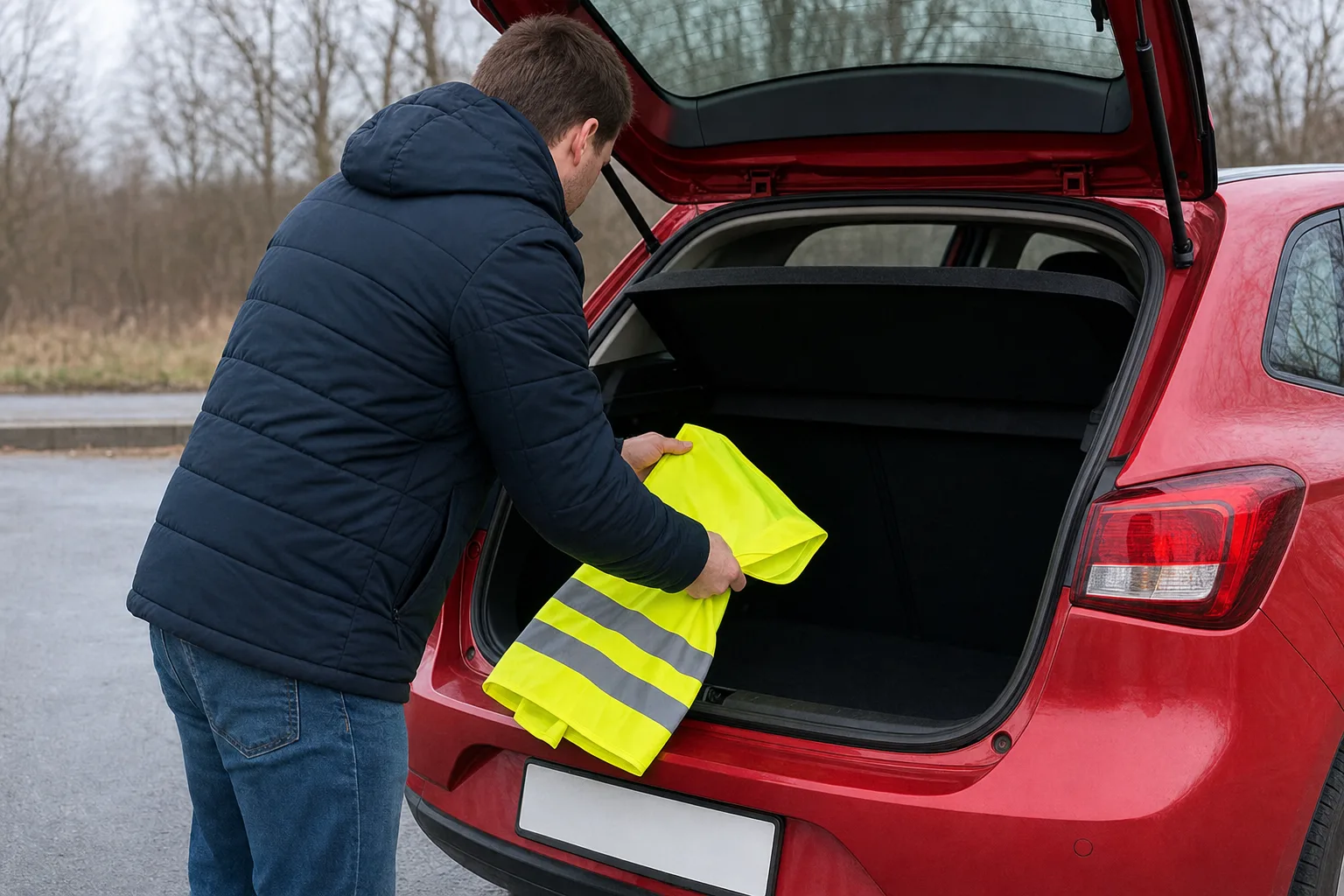
Where must the retro-reflective safety vest be kept?
🛣️Practise Special situations (motorway, tunnels, difficult conditions, eco-driving)
Exam-style questions on this theme, with corrections and explanations — plus the full bank with access.
❓ Frequently asked questions
When is the rear fog light compulsory?
When visibility drops below 100 metres (fog, snow or heavy rain). You must switch it off as soon as visibility improves, because it severely dazzles the drivers behind you.
What should you do if you aquaplane?
Ease off the accelerator, keep the steering wheel straight without any abrupt movement and do not brake hard. Wait for the tyres to regain contact with the road. The best prevention is still to drive more slowly in the rain.
What is the maximum speed when visibility is very poor?
When visibility drops below 50 metres (fog, snow, heavy rain), speed is limited to 50 km/h on all roads, including motorways. In all cases, you must be able to stop within the limits of what you can see.
Can you fight fatigue at the wheel with coffee or music?
These tricks only delay falling asleep, they do not prevent it. At the first signs of fatigue, the only effective remedy is to stop in a safe place and rest.