Tunnels
A tunnel is an enclosed space where a simple mistake can quickly turn into a disaster: reduced visibility, smoke building up, no easy way out. The Belgian highway code therefore imposes precise rules, from before you even enter until you exit. Knowing them means driving safely and passing this part of the theory exam.
📑 In this lesson (5)
Before entering the tunnel
Preparation starts as you approach. Going from full daylight into the darkness of the tunnel is harsh on the eyes, so you need to anticipate. Switch on your dipped headlights before entering, even in broad daylight, and take off your sunglasses so you are not left in the dark while your eyes adjust.
- Switch on your dipped headlights (never main-beam headlights, which dazzle in an enclosed space).
- Take off your sunglasses as you enter.
- Look out for the signage: speed limit, recommended following distance, location of the emergency exits.
- Tune your car radio to the tunnel's information frequency if one is indicated.
Driving through the tunnel
Inside, the goal is to keep the traffic flowing steadily and to be able to stop without hitting the vehicle in front. The safe following distance is essential: a rear-end collision in a tunnel can block all traffic and turn a minor incident into a catastrophe. Keep to the posted speed and watch the light signals, which may close a lane or require you to stop.
- Keep a sufficient following distance from the vehicle in front.
- Leave your car radio on: in the event of an incident, instructions may be broadcast.
- Never make a U-turn and never reverse: these manoeuvres are prohibited and extremely dangerous.
- Do not stop without a compelling reason and do not carry out any manoeuvre prohibited by the signage.
In the event of a breakdown or traffic jam
If your vehicle breaks down or traffic comes to a standstill, your priority is not to make the situation worse. Pull over as far to the right as possible, ideally into an emergency stopping area if the tunnel has one, and switch off the engine to limit exhaust fumes and the risk of fire. In a traffic jam, keep your distance from the vehicle in front and leave enough space for the emergency services to get through.
- Pull over to the right, into an emergency stopping area if possible.
- Switch off the engine and turn on your hazard warning lights.
- In the event of a breakdown, alert the emergency services via an emergency call point or by calling 112.
- In a traffic jam, stay in your vehicle and listen to the radio unless a danger forces you to do otherwise.
In the event of a fire
Fire is the most feared danger in a tunnel: smoke spreads quickly and becomes deadly within minutes. If the fire is coming from your own vehicle and you can still move forward, drive out of the tunnel. If that is impossible, abandon the vehicle, key in the ignition, and make your way on foot to the nearest emergency exit. Do not try to retrieve your belongings: only your life matters.
- If possible, drive your vehicle out of the tunnel.
- Otherwise, stop on the right, switch off the engine and leave the key in the ignition.
- Leave the vehicle and make your way on foot to an emergency exit, following the markings.
- Alert the emergency services (emergency call point, 112) and only use an extinguisher if the fire is small and just starting.
Summary of the right reflexes
| Situation | Right reflex |
|---|---|
| Before entering | Dipped headlights on, sunglasses off |
| While driving | Following distance, radio on, follow the signage |
| Tempted to manoeuvre | Never a U-turn or reversing |
| Breakdown or traffic jam | Pull over to the right, switch off the engine |
| Fire | Leave the vehicle, emergency exit on foot |
🧠 Check you've got it
Question 1 / 3
3 exam-style questions on this lesson — instant correction.
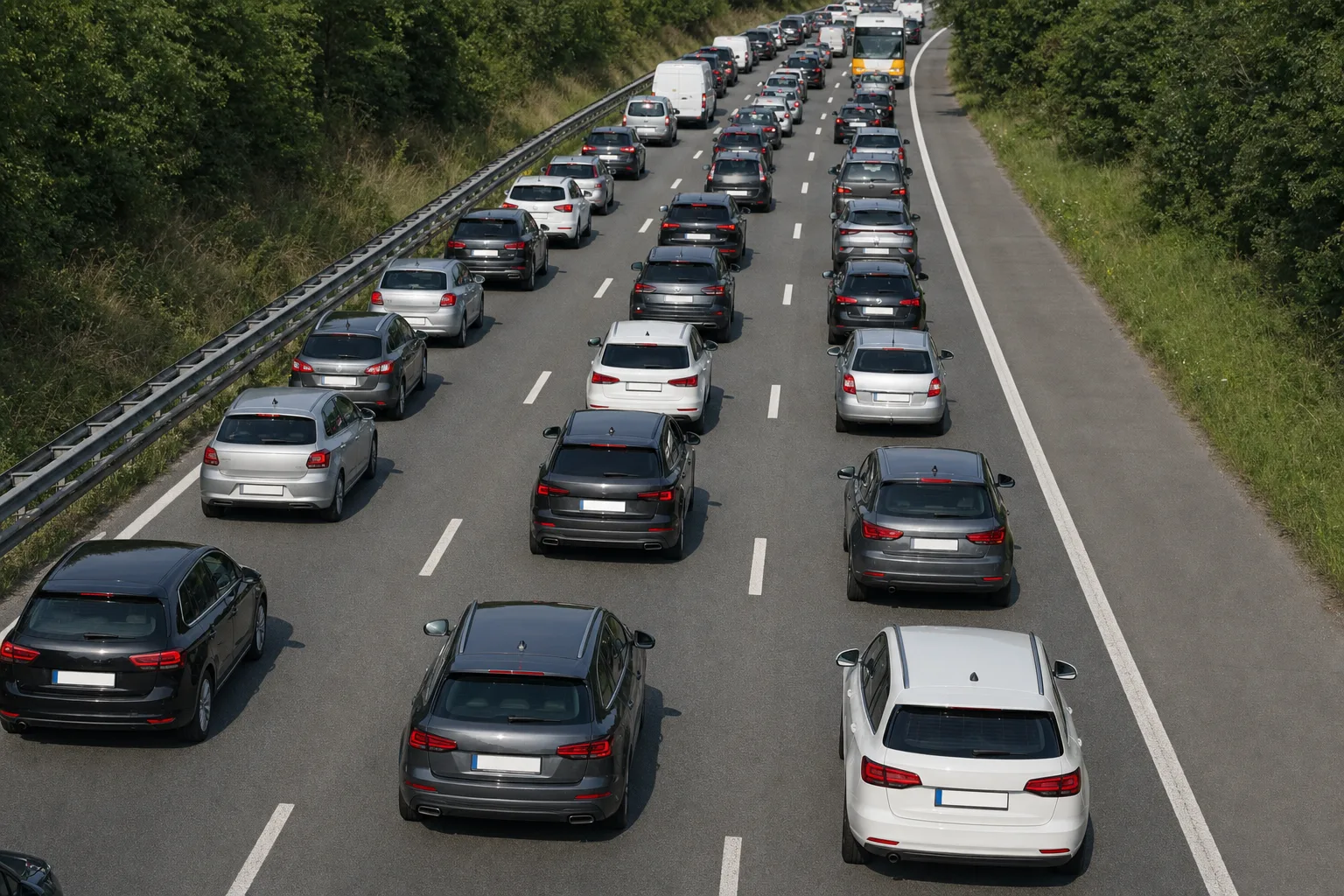
Every traffic lane is congested with a traffic jam. Where must the cars travelling in the left-hand lane position themselves?
🛣️Practise Special situations (motorway, tunnels, difficult conditions, eco-driving)
Exam-style questions on this theme, with corrections and explanations — plus the full bank with access.
❓ Frequently asked questions
Do I have to switch on my lights in a tunnel, even in broad daylight?
Yes. You must switch on your dipped headlights before entering the tunnel, whatever the time of day. Main-beam headlights should be avoided because they dazzle.
What should I do if my car breaks down in a tunnel?
Pull over as far to the right as possible, into an emergency stopping area if there is one, switch off the engine, turn on your hazard warning lights and alert the emergency services via an emergency call point or by calling 112. Never make a U-turn.
What should I do in the event of a fire in a tunnel?
If you can, drive out of the tunnel. Otherwise, stop on the right, switch off the engine leaving the key in the ignition, leave the vehicle and make your way on foot to the nearest emergency exit. Smoke is the main danger.
Can you make a U-turn in a tunnel to flee a danger?
No. U-turns and reversing are prohibited in a tunnel, in all circumstances. To flee a fire, you abandon the vehicle and reach an emergency exit on foot.