⏱️ 6 min read
Speed limits
What is the maximum speed I can drive here? The answer depends on the location, the sign in place and, in Belgium, on the region you are driving in. Many candidates lose points because they don't know the default speeds, in particular the difference between Flanders, Wallonia and Brussels outside built-up areas. Here is the complete map of speed limits.
📑 In this lesson (8)
- 1.Default speed and signed speed
- 2.In built-up areas: 50 km/h
- 3.Outside built-up areas: watch out for regional differences
- 4.On the motorway: 120 km/h (and a minimum)
- 5.Reduced-speed zones
- 6.The C43 [[panneau:c43]] sign and the end of the limit
- 7.Trailers and heavier vehicles
- 8.Roads reserved for motor vehicles and dual carriageways (2x2 lanes)
Default speed and signed speed
Two logics combine. On one hand, a default speed applies according to the type of road (built-up area, outside built-up areas, motorway) even without any sign. On the other, a speed limit sign (round with a red border, the C43  ) can impose a different speed on a specific stretch. When a sign is present, it takes precedence over the default speed.

In built-up areas: 50 km/h
From the F1 sign (start of built-up area) 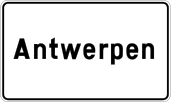 , white background with the name of the locality, the maximum speed is 50 km/h, without any speed sign being necessary. This limit remains in force until the F3 sign (end of built-up area)
 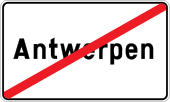 , the same name crossed out with a red line. Many municipalities, however, lower this limit to 30 km/h across all or part of their territory.
Outside built-up areas: watch out for regional differences
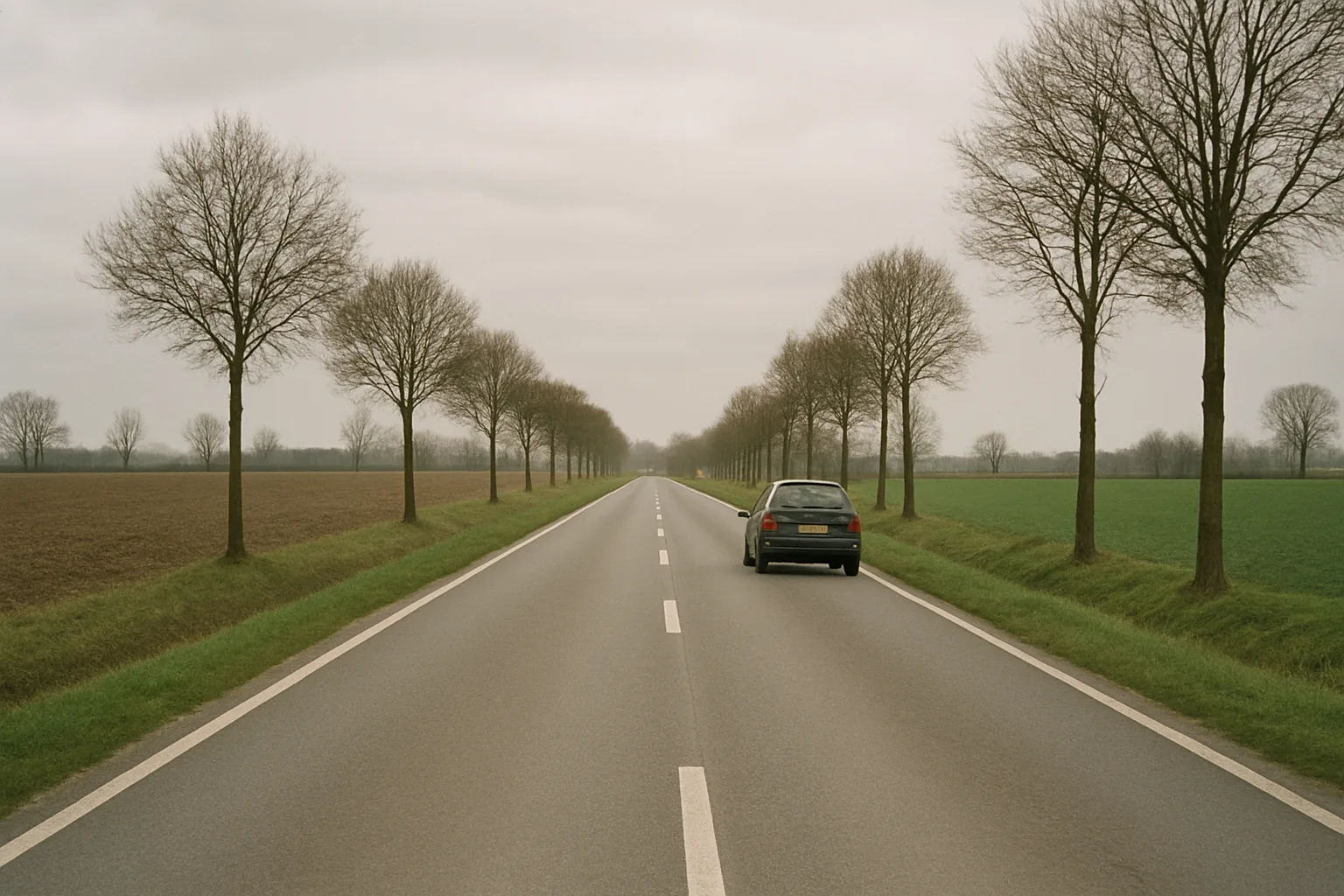
This is where many people go wrong. Since speed rules were regionalised, the default limit outside built-up areas differs according to the region you are in:
- Flanders: 70 km/h by default on ordinary roads outside built-up areas.
- Wallonia: 90 km/h by default outside built-up areas.
- Brussels-Capital Region: 90 km/h where conditions allow (rare stretches outside built-up areas), as almost all of the territory is in fact within a built-up area at 50 or in a 30 zone.
On the motorway: 120 km/h (and a minimum)
On the motorway (entry sign F5 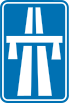 ), the maximum speed is 120 km/h for a car, unless signs impose less. One particular feature: there is also a minimum speed. On stretches where you could drive fast, you may not travel at less than 70 km/h without a valid reason, so as not to create danger by slowing the flow. Roads reserved for motor vehicles (sign F9
 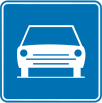 ) follow a similar logic but are not motorways: always check the signs.
Reduced-speed zones
- 30 zone: from the zone sign, 30 km/h maximum until the end-of-zone sign. Common around schools and in residential neighbourhoods.
- School surroundings: often signed as a 30 zone (sometimes only during the hours shown on an additional panel). Maximum vigilance — children are unpredictable.
- Residential zone and home zone: the speed is limited to 20 km/h. Pedestrians and playing are allowed across the full width of the carriageway; you must drive at walking pace and give way to them.
The C43 sign and the end of the limit
The C43  imposes a lower maximum speed on the stretch concerned (here 60). This limit remains in force until an end-of-limit sign
  (the same number crossed out with a line), a new, different C43 sign, or a change of road type (entering a built-up area, a motorway…). An additional panel can restrict the limit to certain road users (e.g. heavy goods vehicles) or to certain time slots.
Trailers and heavier vehicles
Towing a trailer or driving a heavier vehicle often reduces the permitted speed. As a guide, a car with a trailer generally cannot exceed 90 km/h on the motorway, and lorries over 3.5 tonnes are also restricted to below 120 km/h. These exact limits depend on the vehicle category and the region; if in doubt at the exam, remember the principle: the heavier or the more laden the vehicle, the lower the permitted speed.
| Location | Maximum speed |
|---|---|
| Built-up area (F1 sign) | 50 km/h |
| Outside built-up areas — Flanders | 70 km/h |
| Outside built-up areas — Wallonia and Brussels | 90 km/h |
| Motorway (F5 sign) | 120 km/h (minimum 70 km/h) |
| 30 zone / school surroundings | 30 km/h |
| Residential zone or home zone | 20 km/h |
Roads reserved for motor vehicles and dual carriageways (2x2 lanes)
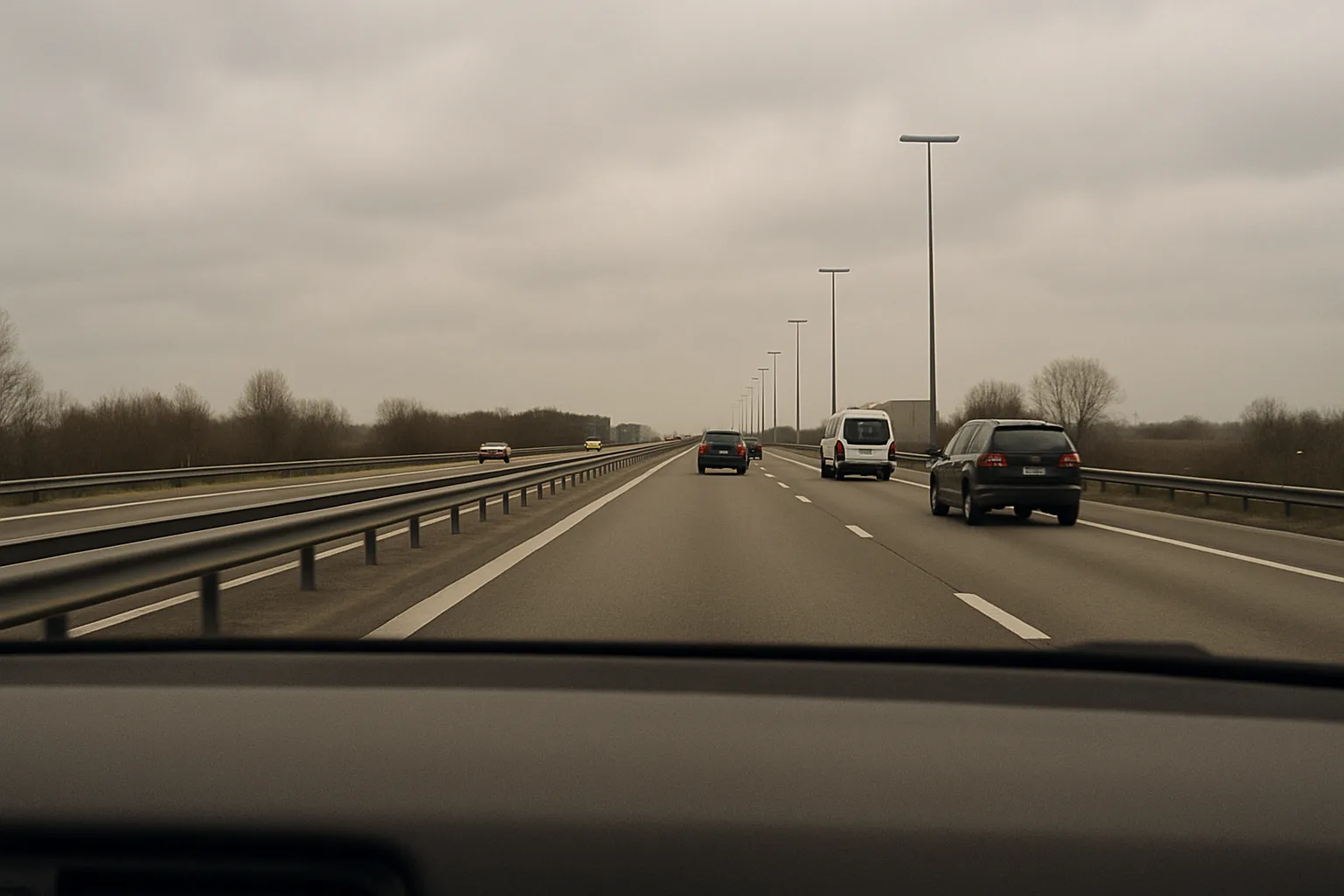
Two types of road escape the default speed outside built-up areas (90 km/h in Wallonia and Brussels, 70 km/h in Flanders) and allow 120 km/h in all Regions. First, the road reserved for motor vehicles, announced by the F9 sign: reserved for motor vehicles, it looks like a motorway without being one, and the maximum speed there is 120 km/h. Second, outside built-up areas, any road with 2x2 lanes (at least two lanes per direction) whose two directions are separated by a central reservation: there too the maximum speed is 120 km/h.
| Type of road | Maximum speed |
|---|---|
| Road reserved for motor vehicles (F9 sign) | 120 km/h (all Regions) |
| 2x2 lanes outside built-up areas with a central reservation (median strip) | 120 km/h (all Regions) |
| 2x2 lanes outside built-up areas separated only by road markings | 90 km/h (Wallonia / Brussels) — 70 km/h (Flanders) |
🧠 Check you've got it
Question 1 / 3
3 exam-style questions on this lesson — instant correction.
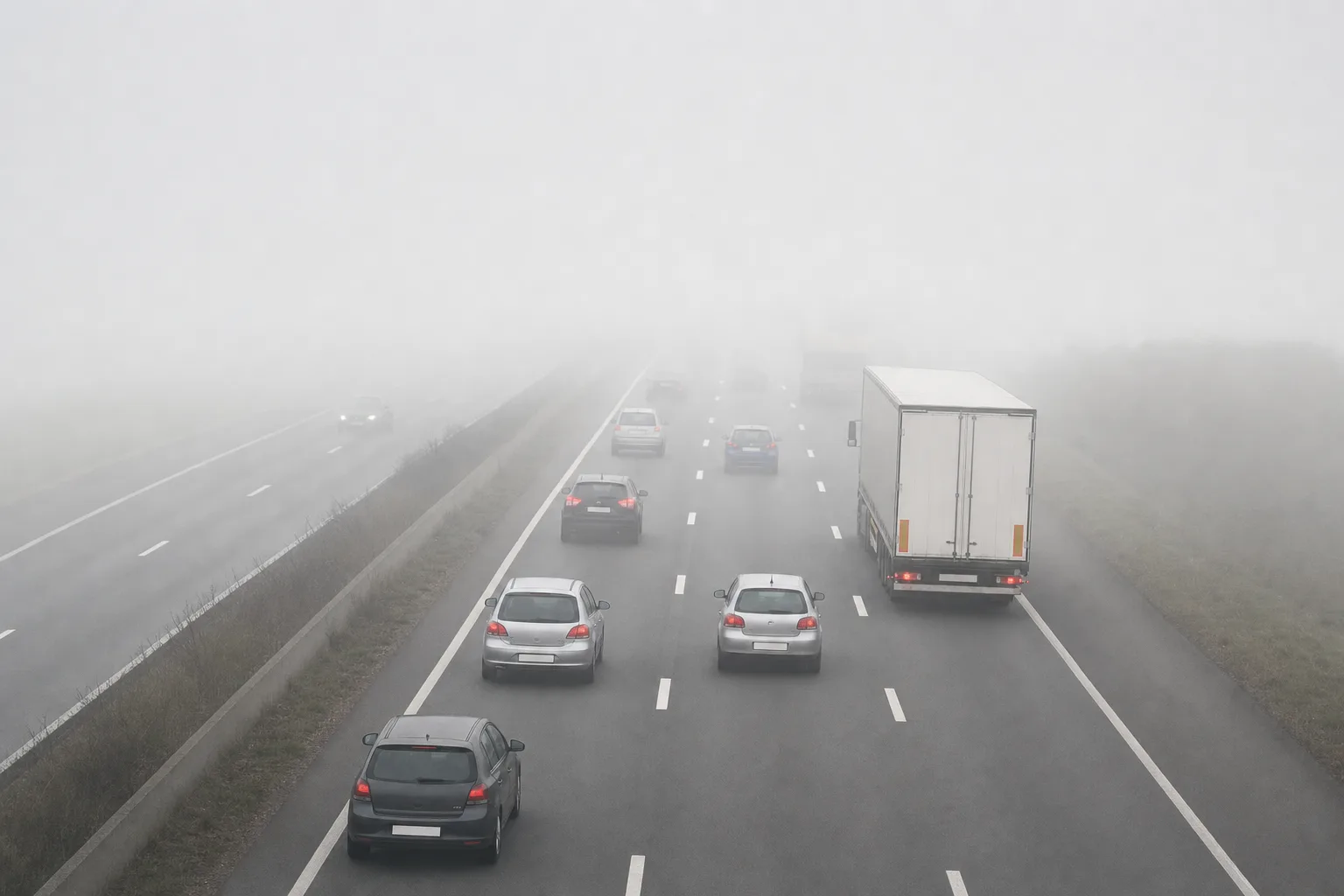
You are driving on the motorway in fog. At what speed do you drive?
🏎️Practise Speed and safe following distances
Exam-style questions on this theme, with corrections and explanations — plus the full bank with access.
❓ Frequently asked questions
What is the default speed outside built-up areas in Belgium?
It depends on the region: 90 km/h in Wallonia and Brussels, but 70 km/h by default in Flanders on ordinary roads. It is one of the most common mistakes at the exam.
Is there a minimum speed on the motorway?
Yes. On stretches where traffic allows, you may not drive at less than 70 km/h without a valid reason, so as not to obstruct or endanger the rest of the traffic.
How far does a C43 speed limit sign apply?
Until an end-of-limit sign (the same number crossed out), a new, different C43 sign, or a change of road type such as entering a built-up area or a motorway.
What speed applies in a residential zone or home zone?
20 km/h maximum. Pedestrians and playing are allowed across the full width of the carriageway: you drive at walking pace and give way to them.