⏱️ 6 min read
Cyclists
The cyclist is a vulnerable road user: no bodywork, no seatbelt, a narrow silhouette that is easy to lose sight of. In the exam as on the road, knowing how to overtake them, anticipate them and give them their space is part of the basics. Here are the Belgian rules to master so you can share the road safely.
📑 In this lesson (8)
Why cyclists demand special attention
A cyclist may swerve to avoid a pothole, a drain cover or a car door, lose their balance on a climb or be knocked off course by a gust of wind. Their path is never as stable as a car's. As a driver, you must constantly anticipate these deviations and keep a sufficient safety margin.

Overtaking a cyclist: the lateral distance
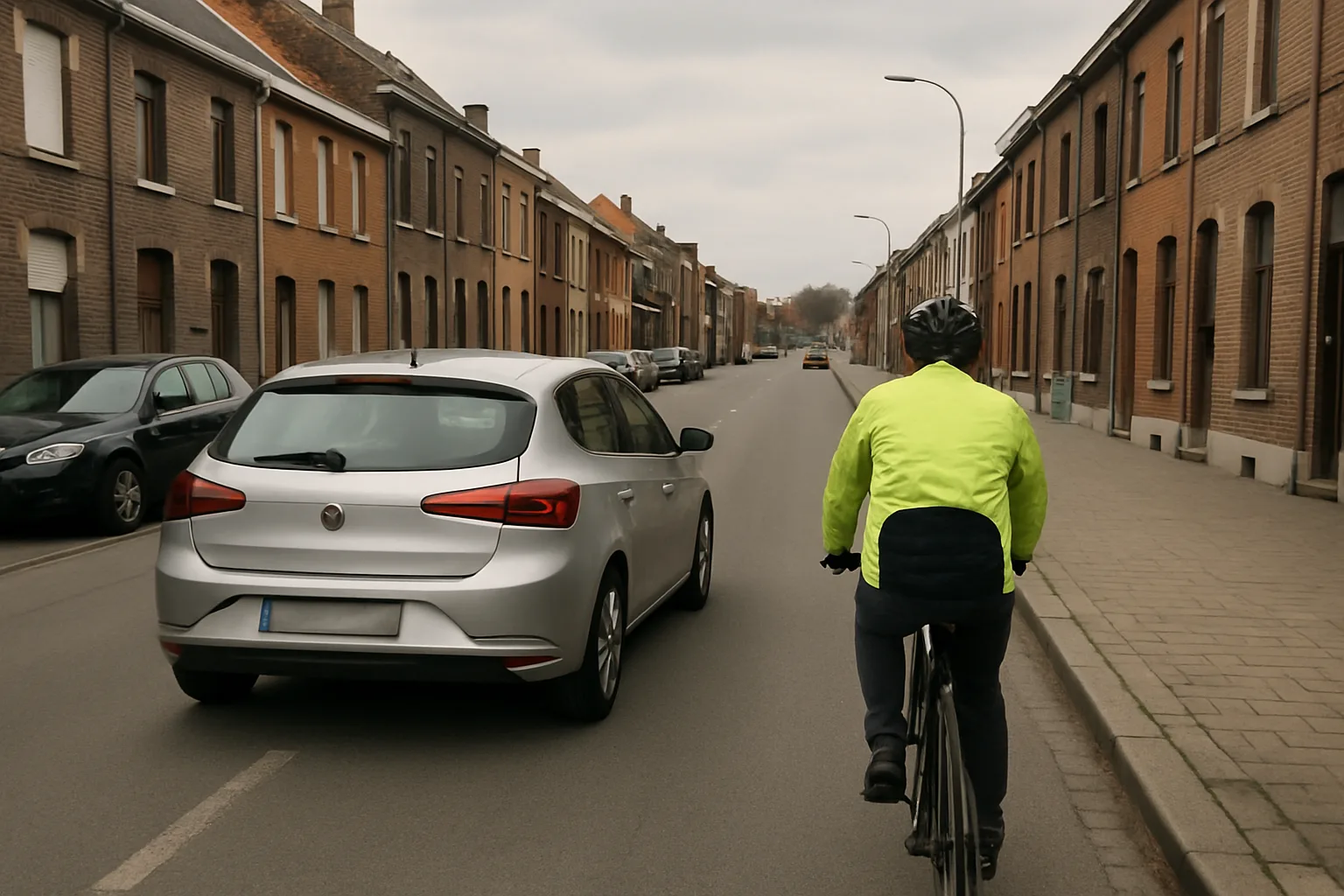
When you overtake a cyclist (or a moped rider), you must leave a minimum lateral gap between your vehicle and them. This distance depends on where you are:
- In a built-up area: at least 1 metre of clearance.
- Outside built-up areas: at least 1.5 metres of clearance.
If the width of the carriageway does not allow you to keep this gap, you must wait: slow down, stay behind the cyclist and only overtake when it can be done in complete safety. To keep this distance, you may cross a continuous white line provided you do so without endangering other road users.
Cycle paths and the cycle street
A cycle path is reserved for cyclists. It is indicated either by the round blue sign D7  or by two parallel broken white lines marked on the ground. You may not drive on it, park on it or use it for stopping, except to cross it briefly to enter a property or a car park.
The cycle street, indicated at its entrance by a specific sign, is a street where cyclists may use the full width of the traffic lane. Cars are allowed in it but may never overtake a cyclist, and the speed limit there is 30 km/h.
Bike boxes and cyclist right-turn signs
At traffic lights, a bike box is an area marked on the ground, located in front of the stop line for cars. At a red light, you stop your vehicle behind this area: it is reserved for cyclists, who can position themselves in front of you, clearly visible, and set off first.
The cyclist right-turn sign (a triangular sign with a bicycle and an arrow) allows cyclists to cross the junction to the right, or straight ahead in some cases, even when the light is red, provided they give way to other road users. So do not be surprised to see a cyclist carry on while your light is red: it is legal.
Blind spots
The blind spot is the area your mirrors do not cover. A cyclist in it becomes invisible. The danger is extreme with lorries and buses, whose blind spots are enormous, particularly on the right when turning right: it is one of the deadliest causes of accidents involving cyclists.
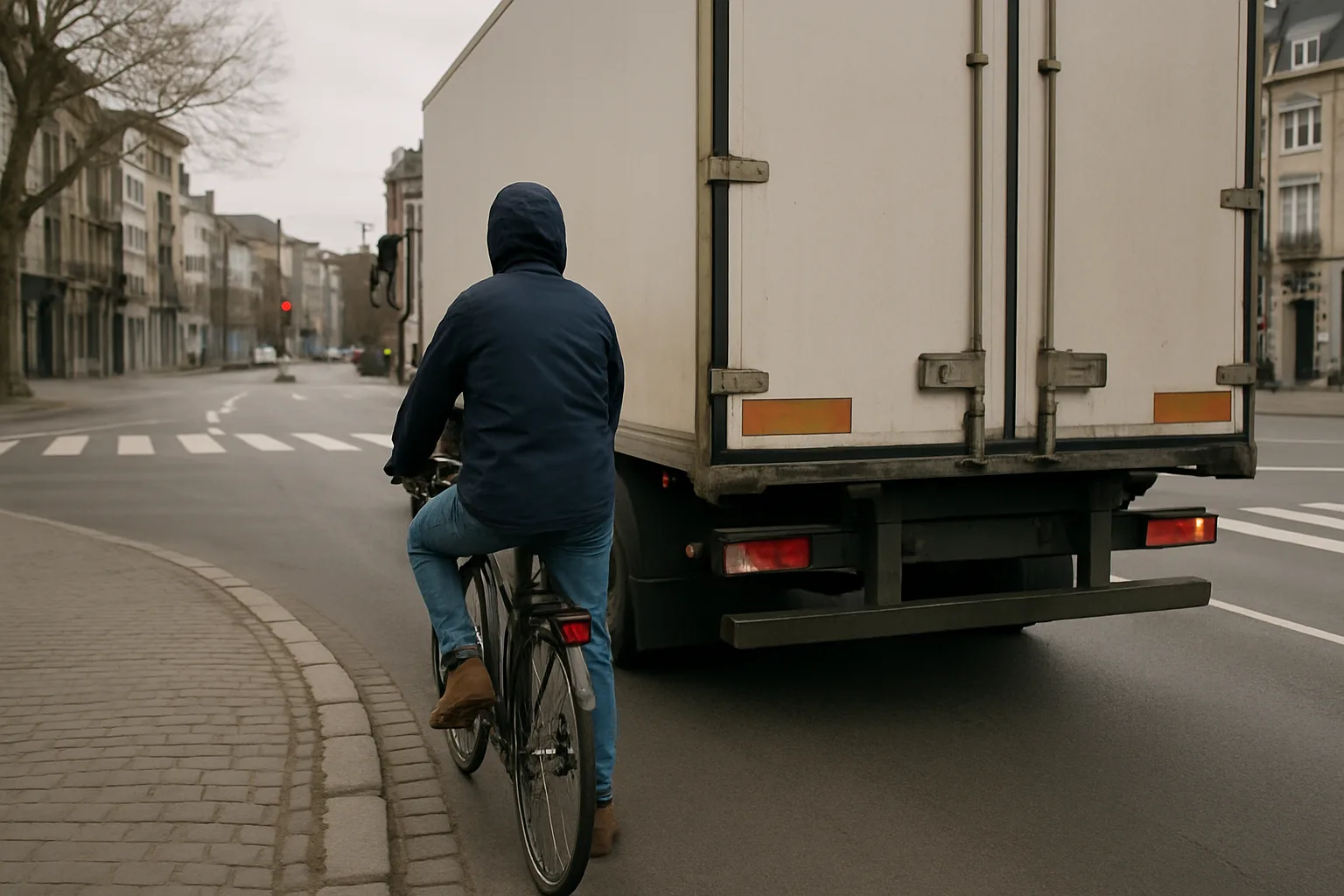
- Before turning or changing lane, check your mirrors and glance over your shoulder.
- Be especially wary of cyclists filtering up the right-hand side of a queue of cars.
- Near a stationary lorry, always assume the driver cannot see you.
Opening a car door
Opening your door without looking can throw a cyclist to the ground or under another vehicle. Before opening, you must make sure you are not putting anyone in danger: check your mirrors and look behind you. An effective technique is to open with the hand furthest from the door, which naturally forces your torso to pivot and your gaze to turn towards the rear.
Priority and respect for cyclists
A cyclist is a driver like any other: priority from the right applies to them too. At a junction, a cyclist coming from your right has priority just like a car. When you turn (right or left), you must give way to cyclists going straight on, whether they are riding on the carriageway or on a cycle path you are crossing.
| Situation | What you must do |
|---|---|
| Overtaking in a built-up area | Leave at least 1 m of clearance |
| Overtaking outside built-up areas | Leave at least 1.5 m of clearance |
| Red light with a bike box | Stop behind the bike box |
| Cycle street | No overtaking, max 30 km/h |
| You are turning right | Check the blind spot, give way to cyclists |
| You are getting out of your vehicle | Look before opening the door |
Cycle zone, cycle street and cyclist crossing
A cycle street is a street where cyclists have priority of use; a cycle zone is a set of such streets, signposted at the entrance and exit of the zone. In both cases, motorists may drive there but are subject to two strict rules: it is forbidden to overtake a cyclist and the speed limit is 30 km/h. The cyclist may use the full width of the carriageway (on a one-way street) or the right-hand half (on a two-way street).
- No overtaking a cyclist in a cycle street or cycle zone, even if they seem slow to you.
- Maximum speed of 30 km/h for all vehicles in these streets.
- The cyclist crossing is marked on the ground by two broken lines made up of white squares or diamonds: at such a crossing, you let cyclists with priority cross.
🧠 Check you've got it
Question 1 / 3
3 exam-style questions on this lesson — instant correction.
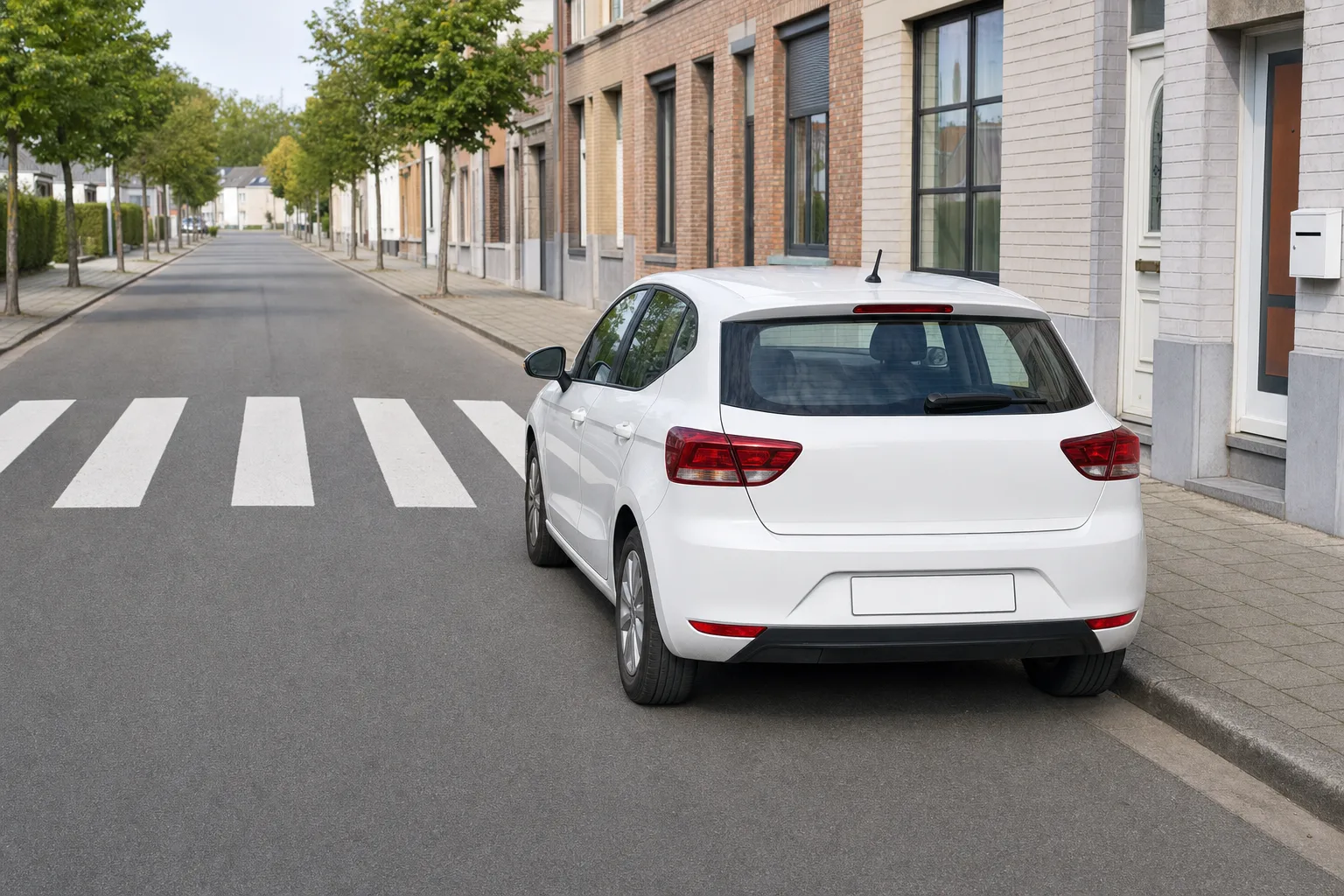
At what minimum distance before a pedestrian crossing is parking prohibited on the carriageway?
🚸Practise Vulnerable road users and priority vehicles
Exam-style questions on this theme, with corrections and explanations — plus the full bank with access.
❓ Frequently asked questions
How much space must I leave when overtaking a cyclist?
At least 1 metre in a built-up area and 1.5 metres outside built-up areas. If the carriageway does not allow it, you must stay behind the cyclist until you can overtake safely.
May I stop or park on a cycle path?
No. The cycle path is reserved for cyclists: you may not drive, park or stop on it. You may only cross it briefly to reach a property or a car park.
May a cyclist go through a red light?
Yes, only where a cyclist right-turn sign allows it, to turn right (or go straight ahead depending on the sign) and provided they give way to other road users. Everywhere else, the red light applies to them too.
Must I give way to a cyclist coming from my right?
Yes. The cyclist is a driver: priority from the right applies to them just as it does to a car, unless signs indicate otherwise. When you turn, you also give way to cyclists going straight on.