⏱️ 3 min read
Priority from the right
At a junction without signs, who goes first? In Belgium, the golden rule is priority from the right. Misunderstood, it is one of the leading causes of failure at the theory exam and of collisions at junctions. Here is how to apply it without hesitation.
📑 In this lesson (5)
The principle of priority from the right
At every junction, you must give way to the driver coming from your right, unless indicated otherwise. It does not matter whether the road on the right is smaller, less busy or looks secondary: by default, the one coming from the right goes first.

When does it apply?
Priority from the right is the default rule. It applies whenever nothing else sets the order of passage:
- No priority sign (no B1
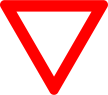 "give way", no B5
  "stop", no priority-road sign).
 - No traffic lights in operation and no authorised official.
- No road marking requiring you to give way.
In that case, look to your right: if a road user arrives there at the same time as you, you let them pass.
The exceptions: when you lose priority
Several situations cancel priority from the right. You must then give way even to a vehicle coming from the left, or stop:
- A B1 (give way) or B5 (stop) sign applies to you.
- You are emerging from a place not open to public traffic: car park, petrol station, dirt track, path, private property, garage exit. You then give way to all other road users.
- You are approaching a roundabout: vehicles already on the circulatory carriageway have priority.
- Traffic lights, an authorised official or a priority sign organise the junction differently.
Priority from the right and changing direction
Having priority never exempts you from caution. A driver turning left must first let pass the road users coming from the opposite direction who are going straight on or turning right. And even with priority, you may never force your way through if doing so creates a danger.
Special cases to know
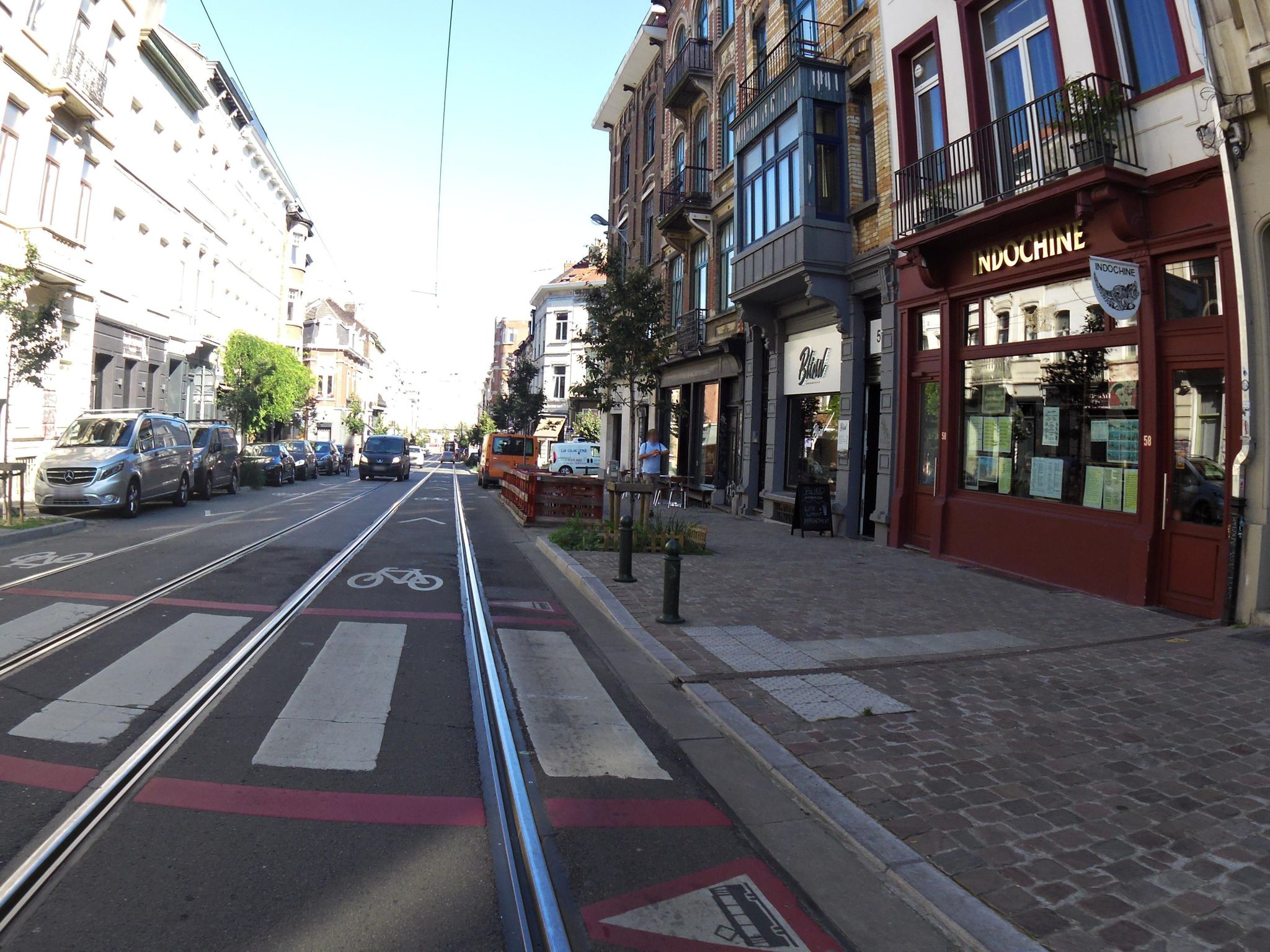
- Trams: the tram has priority over other road users, from the left as well as the right, unless indicated otherwise.
- Priority vehicles (ambulance, fire brigade, police) using their special audible warning device: you give way to them and, if necessary, you stop.
- Buses leaving their stop in a built-up area: you must, if possible without danger, let them rejoin the traffic.
| Situation | You must… |
|---|---|
| Junction without signs | Give way to the right |
| You are coming out of a car park / dirt track | Give way to everyone |
| B1 or B5 sign facing you | Give way (B5: come to a complete stop) |
| You are approaching a roundabout | Give way to vehicles already on it |
| Priority vehicle on an emergency call | Give way and, if necessary, stop |
🧠 Check you've got it
Question 1 / 3
3 exam-style questions on this lesson — instant correction.
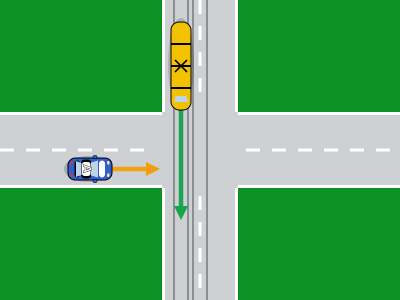
Tram T and car A arrive at the same time. Who has priority?
🔀Practise Right of way and intersections
Exam-style questions on this theme, with corrections and explanations — plus the full bank with access.
❓ Frequently asked questions
Does priority from the right apply even if my road is wider?
Yes. In Belgium, the width or importance of the road does not count. Without signs, you give way to the vehicle coming from the right, even if your road looks like the "main" one.
Who has priority on a roundabout?
Vehicles already on the circulatory carriageway. When entering, you give way. The classic priority from the right does not apply inside the roundabout.
I have priority but the other driver does not stop. What should I do?
Priority is never a right to force your way through. If the other driver does not give way, you must avoid the accident: slow down or stop.
Must I give way to a cyclist coming from the right?
Yes. Priority from the right applies to all drivers, including cyclists, unless signs indicate otherwise.