⏱️ 5 min read
Traffic lights
Three colours, one unchanging order: red, amber and green set the rhythm of traffic at thousands of junctions. Read correctly, traffic lights prevent collisions; misread, they cause exam faults and accidents. Beyond the classic three-colour light, you also need to know the arrows, the flashing amber light and the lights reserved for pedestrians, cyclists and public transport. Here is everything you need to master.
📑 In this lesson (7)
The three colours of the traffic light
The classic traffic light shows three colours arranged from top to bottom: red at the top, amber in the middle, green at the bottom. Each one commands a specific behaviour and the sequence is always the same: green, then amber, then red, then green again.
- Green light: you may pass the light and continue on your way, provided the road is clear and you can clear the junction.
- Steady amber light: it announces the change to red. You must stop, unless you are already so close to the light that stopping abruptly would be dangerous.
- Red light: stopping is compulsory. You bring your vehicle to a stop before the light, before the stop line or before the pedestrian crossing.
Where exactly should you stop?
At a red or amber light, you stop before the transverse stop line marked on the carriageway. Where there is no line, you stop level with the light and, if there is one, before the pedestrian crossing, without ever encroaching on it. Also make sure you do not block the junction or obstruct other road users.
Directional arrows
Some lights show one or more illuminated arrows instead of a full disc. The light then applies only to the direction indicated by the arrow.
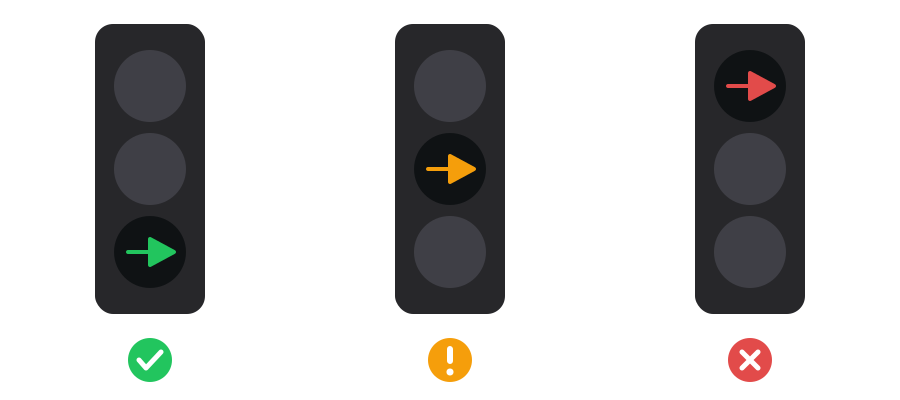
- Green arrow: you may proceed only in the direction of the arrow (for example turning right).
- Amber arrow: prepare to stop for that direction, just as for a steady amber light.
- Red arrow: stopping is compulsory for the direction indicated, even if another light at the junction is green for a different direction.
The flashing amber light
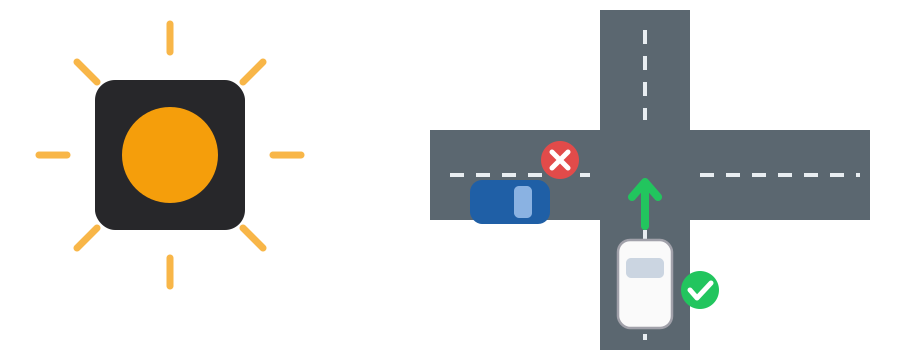
A flashing amber light (most often outside peak hours or at night) no longer regulates the order of passage. It simply means: caution. The junction then operates under the ordinary rules: in the absence of other signs, priority from the right applies.
Lights for pedestrians and cyclists
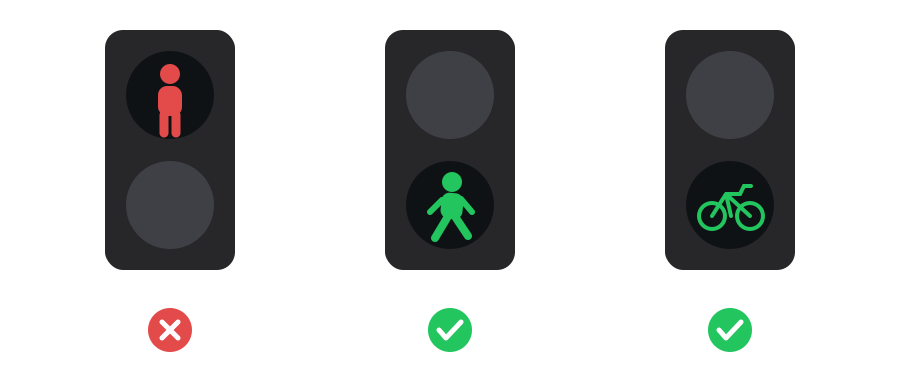
Pedestrians have two-colour lights showing a silhouette: the green silhouette allows crossing, the red silhouette forbids it. When the green light starts flashing, a pedestrian who has already started crossing must hurry to finish but must no longer step onto the crossing.
Cyclists (and riders of two-wheeled mopeds) may have specific lights bearing a bicycle symbol. These lights apply only to them; they follow the same colour logic as ordinary lights.
Lights for buses and trams
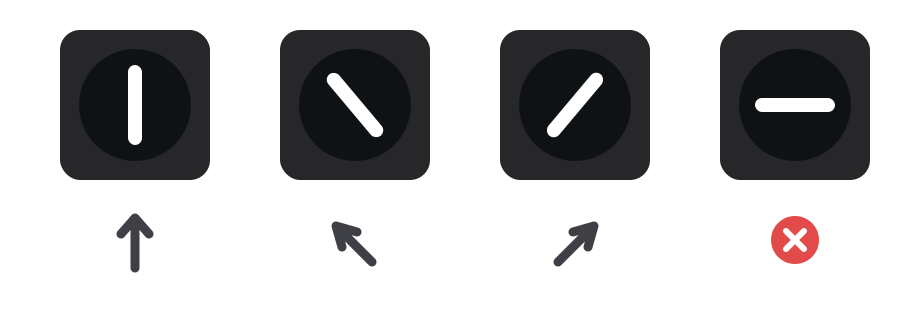
Public transport bus and tram drivers have special lights made of illuminated white bars on a dark background. A vertical white bar allows them to continue straight ahead; slanted bars indicate a direction (left or right); a horizontal bar means stop. These lights are not meant for car drivers: do not confuse them with your own lights.
The order of priority between instructions
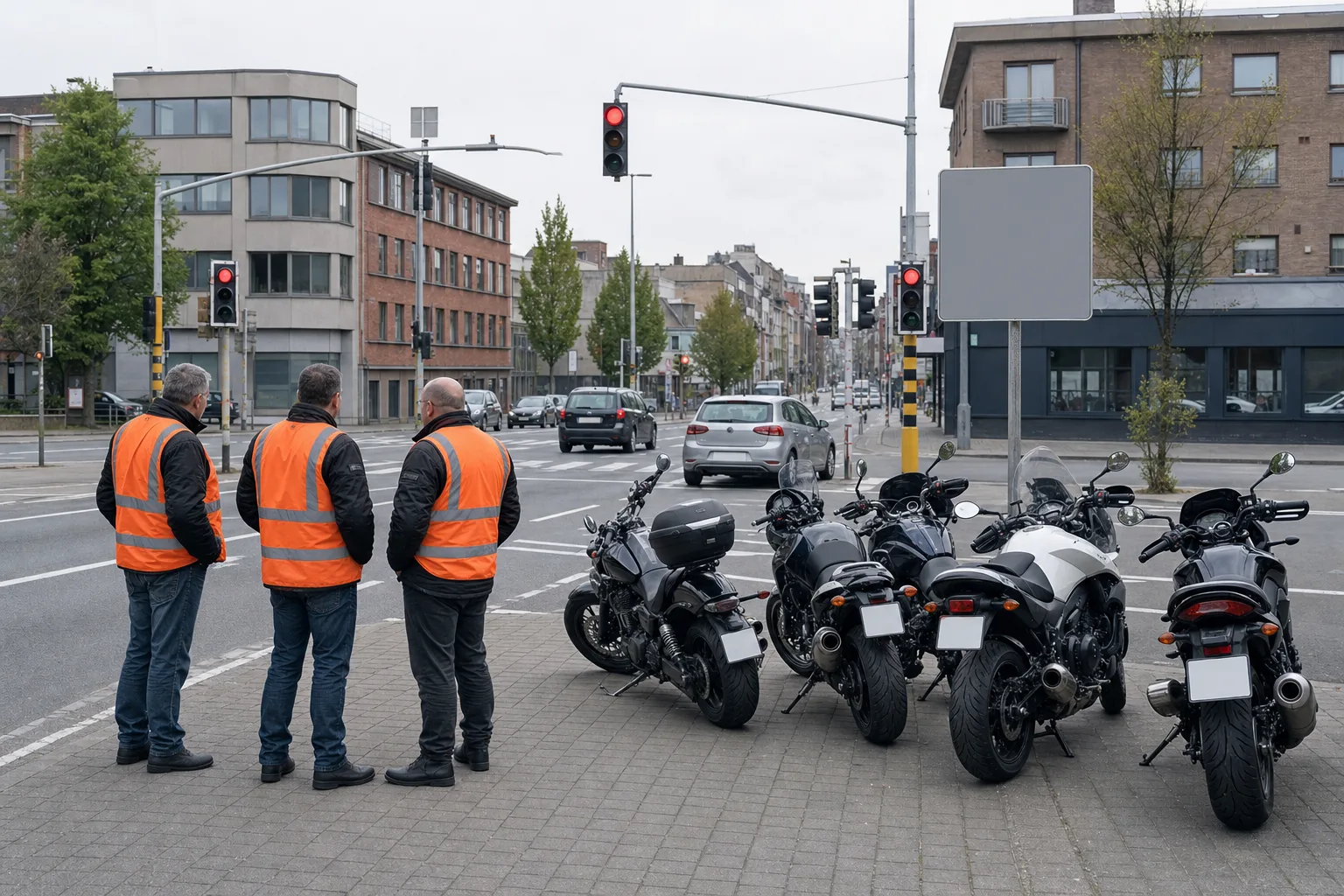
What happens when several instructions contradict each other, for example a green light but an official signalling you to stop? The Belgian highway code sets a clear order, from strongest to weakest:
- The instructions of an authorised official (they override everything else).
- Traffic lights.
- Road signs.
- Road markings.
- The general traffic rules (including priority from the right).
| Light | Meaning |
|---|---|
| Green | Proceed if the road is clear and the junction can be cleared |
| Steady amber | Stop, unless stopping has become dangerous |
| Red | Stopping compulsory before the line or the light |
| Flashing amber | Caution: ordinary rules, priority from the right |
| Green / red arrow | Applies only to the direction of the arrow |
🧠 Check you've got it
Question 1 / 3
3 exam-style questions on this lesson — instant correction.

You come across this sign. What is the correct reaction?
🚦Practise Signs, road markings and traffic lights
Exam-style questions on this theme, with corrections and explanations — plus the full bank with access.
❓ Frequently asked questions
What should I do if the light turns amber right in front of me?
In principle, amber requires you to stop. But if you are already so close to the light that stopping abruptly would be dangerous (a risk for the vehicle behind you), you may pass the light. The rule is never "speed up to get through".
An official signals me to stop while the light is green. Whom should I obey?
The authorised official. Their instructions override traffic lights, road signs and all other rules. So you obey the official and stop, even at a green light.
What does a flashing amber light mean?
It means caution: the light no longer regulates the junction. You slow down and apply the ordinary rules. Without other signage, priority from the right applies. This light does not give you any priority.
What are the lights made of white bars for?
They are the lights reserved for public transport bus and tram drivers. A vertical bar allows straight ahead, a slanted bar indicates a direction, a horizontal bar requires stopping. They do not apply to car drivers.