⏱️ 4 min read
Authorised officials
At the very top of all road signalling are the authorised officials. When an official is directing traffic in the middle of a junction, it doesn't matter what the lights or signs say: they are the one you follow. Understanding the hierarchy of road signalling and recognising their signals is an essential foundation for the theory exam.
📑 In this lesson (5)
The hierarchy of road signalling
On the road, not all indications carry equal weight: they follow a strict order of priority. When two sources of information contradict each other, you always apply the one that sits higher in this hierarchy.
- Instructions from authorised officials (hand signals).
- Traffic lights.
- Road signs.
- Road markings.
- The general rules of the Belgian highway code (e.g. priority from the right).
Who are the authorised officials?
The term "authorised official" doesn't only mean a police officer. It covers everyone the law empowers to direct traffic. In uniform or wearing a recognisable distinctive sign, they include in particular:
- Police officers (federal police and local police).
- Community wardens (gardiens de la paix) assigned to traffic duty.
- Customs staff and certain military personnel in the performance of their duties.
- Authorised supervisors near schools (helping children cross).
- Road captains, race marshals and other authorised persons at sporting events, roadworks or abnormal-load convoys.
The signals that require you to stop
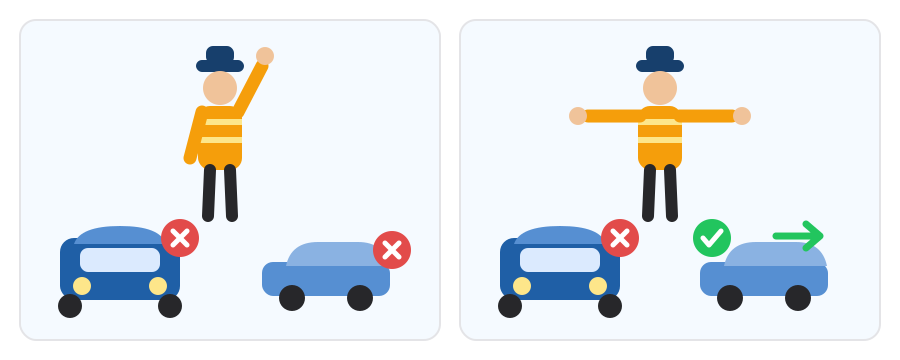
Two main signals are used to stop traffic. They are not aimed at the same road users: it all depends on the official's position relative to you.
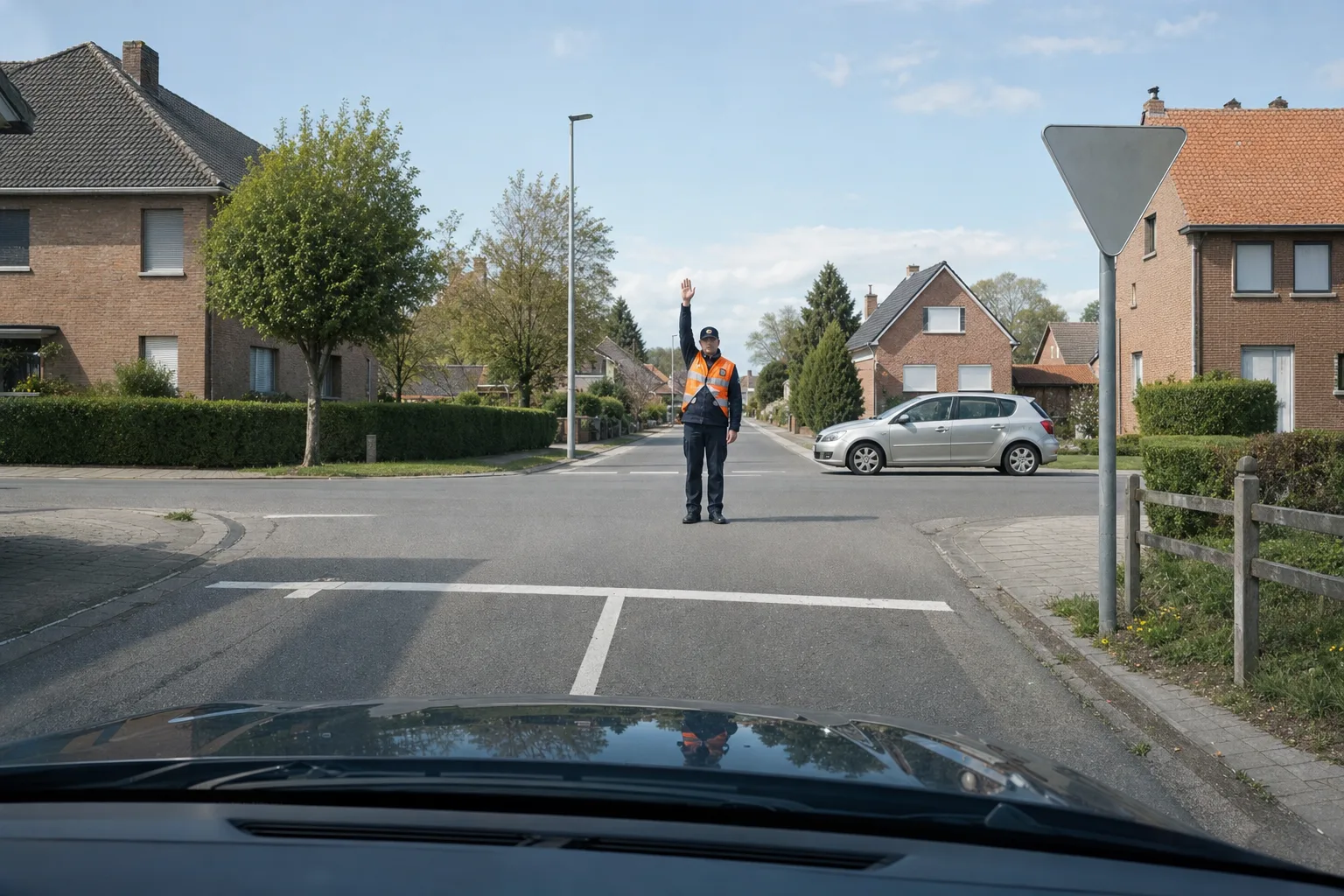
Arm raised vertically
An arm extended upwards means stop for all road users, whatever their direction. It is the equivalent of the amber/red light: everyone comes to a halt. Important exception: drivers already in the junction when the signal is given continue on and clear the junction.
Arm(s) extended horizontally
One or both arms extended horizontally require road users coming from the front and from behind to stop, that is, in the direction perpendicular to the official's arms. On the other hand, road users arriving from the sides (from the direction of the official's hands) may continue on their way.
Waving a red light at night
To be seen in the dark or in poor visibility, the official may use a red light. A transverse waving of this red light (a side-to-side movement) means stop for the drivers the official is facing. You must come to a halt just as you would at a steady red light.
Why obey the official above all else?
An authorised official never steps in by chance: broken traffic lights, an accident, a congested junction, a convoy or procession passing through, school leaving time. They see what you cannot see and adjust the flow in real time. That is why their signals temporarily override fixed signalling, which cannot take account of the situation at that moment.
| Official's signal | Meaning |
|---|---|
| Arm raised vertically | Stop for everyone (except those already in the junction) |
| Arm(s) extended horizontally | Stop for those coming from the front and from behind |
| Transverse waving of a red light | Stop for the drivers concerned (at night, in poor visibility) |
| Arm lowered / gesture inviting you to move forward | Way is clear: you may proceed |
🧠 Check you've got it
Question 1 / 3
3 exam-style questions on this lesson — instant correction.
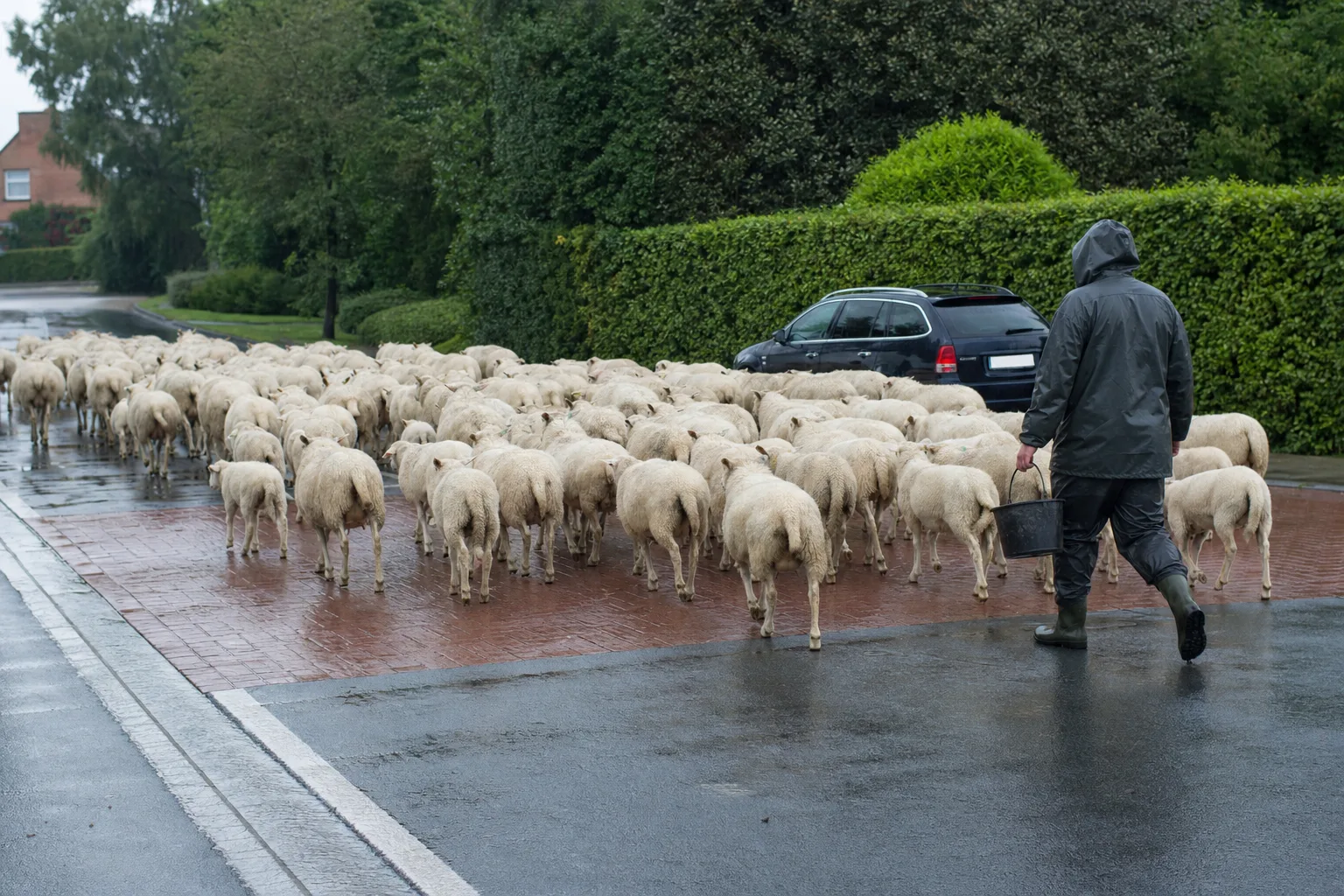
A shepherd moving along the public road leading his flock of sheep is...
🚦Practise Signs, road markings and traffic lights
Exam-style questions on this theme, with corrections and explanations — plus the full bank with access.
❓ Frequently asked questions
What should I do if the official tells me to move forward while the light is red?
You follow the official. Their instructions override traffic lights. So you move forward, staying careful, even if the light stays red.
What does an arm extended horizontally mean?
It requires road users facing the official and behind them to stop. Those arriving from the direction of the arms may continue driving.
Does the signal apply to me if I am already in the junction?
No. If you are already in the junction when the official raises their arm, you continue on your way to clear the junction as quickly as possible.
Is a supervisor near a school an authorised official?
Yes, when they are authorised and recognisable by their distinctive sign. You must obey their signals so that children can cross safely.