⏱️ 4 min read
Manoeuvres
Reversing, making a U-turn, leaving a parking space, changing lane: these are manoeuvres. Under the Belgian highway code, they all share one common point and one single overriding rule. The driver who manoeuvres disturbs the normal flow of traffic: they must therefore give way to all other road users and take extra care. Understanding this concept properly helps you avoid serious faults both in the exam and on the road.
📑 In this lesson (6)
What is a manoeuvre?
A manoeuvre is a movement by which a driver leaves the normal flow of traffic: they leave their path, their line of traffic or their space to reach another part of the carriageway. What all manoeuvres have in common is that they disturb other road users already in motion. That is why the highway code requires the driver who manoeuvres to let everyone else pass.
The main manoeuvres
The Belgian highway code treats the following actions, among others, as manoeuvres:
- Making a U-turn to set off in the opposite direction.
- Reversing (driving backwards).
- Leaving a parking space or moving into one.
- Changing traffic lane or moving sideways.
- Pulling out: leaving a line of stationary or parked vehicles.
- Crossing a pavement, for example to enter or leave a property.
- Crossing the carriageway or entering it other than in the normal direction of travel.
The golden rule: give way to everyone
This is the essential rule of this chapter: the driver carrying out a manoeuvre must give way to all other road users. This applies whatever the user: cars, motorcycles, cyclists, mopeds, pedestrians or riders of new micro-mobility devices. The usual priority from the right does not apply in your favour during a manoeuvre: you are the one who must wait.
Take extra care
Giving way is not enough: the manoeuvre must also be signalled and carried out safely. Before and during every manoeuvre, the driver must:
- Check the traffic ahead, behind and to the sides, using the mirrors.
- Check the blind spot with a glance over the shoulder, where the mirrors cannot see.
- Signal your intention in good time with the indicators (except for manoeuvres where they do not apply).
- Carry it out slowly and only move when the way is genuinely clear.
Focus on the U-turn and reversing
The U-turn and reversing are particularly tricky manoeuvres. They are prohibited wherever they would be dangerous or obstructive: on the motorway and roads reserved for motor vehicles, approaching the crest of a hill or a blind bend, and wherever a sign or road marking prohibits them. Reversing must always be done over the shortest possible distance.
Summary table
| Manoeuvre | Example | You must… |
|---|---|---|
| U-turn | Setting off in the opposite direction | Give way to everyone, check visibility |
| Reversing | Backing up to park | Give way to everyone, shortest distance |
| Leaving a parking space | Leaving a space alongside the pavement | Give way to everyone, indicator |
| Changing lane | Moving into the left-hand lane | Give way to everyone, check the blind spot |
| Crossing a pavement | Entering a property | Give way to pedestrians and cyclists |
Remember: the type of manoeuvre changes, but the obligation stays the same. To go further, see also changing direction and position on the carriageway.
🧠 Check you've got it
Question 1 / 3
3 exam-style questions on this lesson — instant correction.
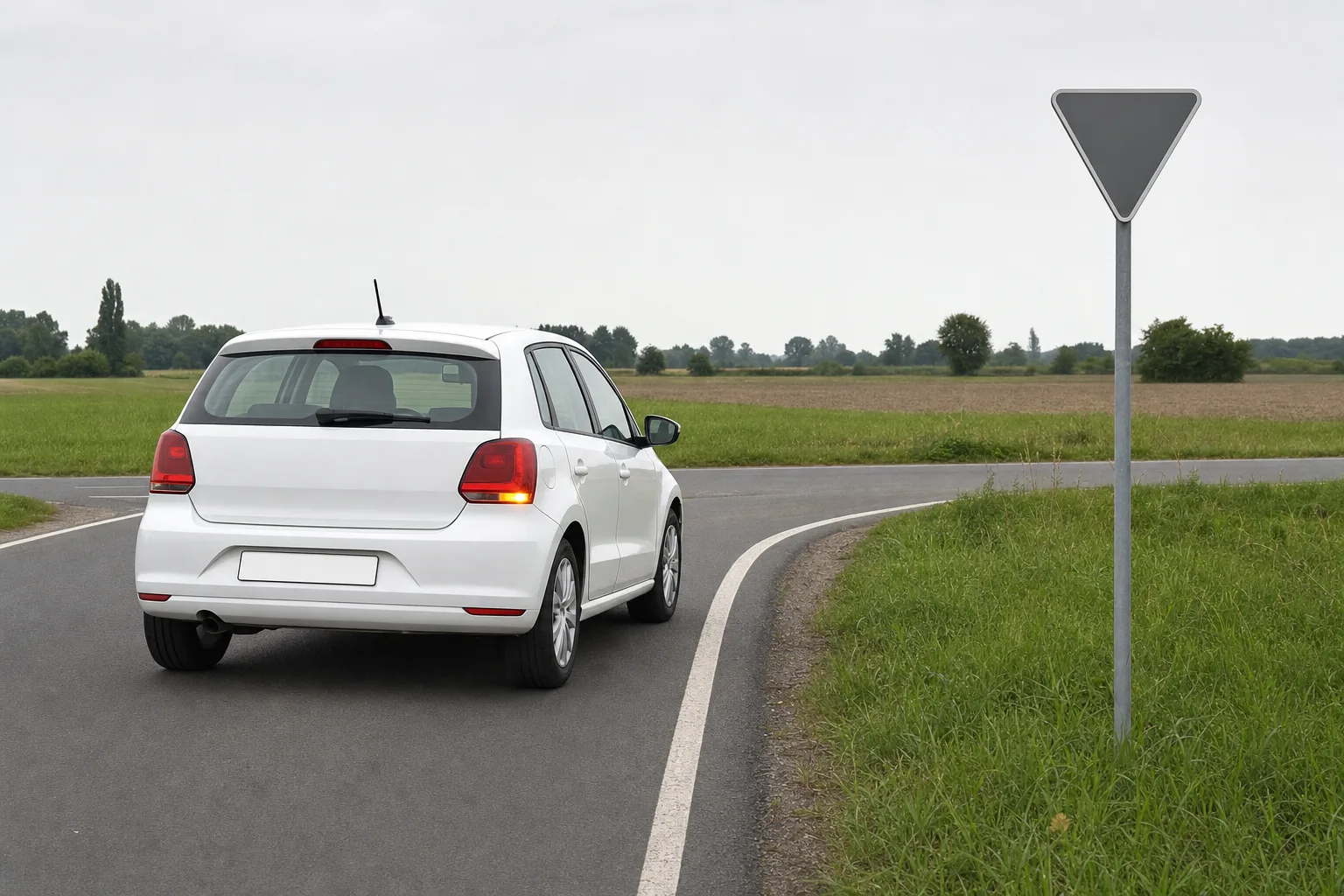

This driver wants to turn right at this junction. No other road users are visible. Must he still switch on the right indicator?
🔄Practise Manoeuvres and position on the road
Exam-style questions on this theme, with corrections and explanations — plus the full bank with access.
❓ Frequently asked questions
Is leaving a parking space a manoeuvre?
Yes. Leaving a parking space is a manoeuvre: you must give way to all other road users, including those coming from your left, and signal your intention.
Do I have priority from the right when I am carrying out a manoeuvre?
No. During a manoeuvre, priority from the right never applies in your favour. You are the one who must let everyone pass, no matter where the other road users are coming from.
Where are reversing and U-turns prohibited?
In particular on the motorway and roads reserved for motor vehicles, approaching the crest of a hill or a blind bend, and anywhere a sign or road marking prohibits them. Reversing must always be done over the shortest distance.
Do I have to give way to a cyclist when I manoeuvre?
Yes. The rule applies to all road users, including cyclists and pedestrians. Remember to check the blind spot, where a cyclist can easily escape your mirrors.