⏱️ 5 min read
Passing oncoming traffic
Passing oncoming traffic means meeting a road user travelling in the opposite direction and going past them side by side. This manoeuvre seems routine, but on a narrow road, near an obstacle or in the mountains, it demands precise rules. Poorly anticipated, it causes collisions and gridlock. Here is how to pass oncoming traffic properly, in line with the Belgian highway code.
📑 In this lesson (6)
Passing oncoming traffic or overtaking: don't confuse them
Passing (oncoming traffic) involves two road users travelling in opposite directions who meet. Overtaking, on the other hand, involves two road users travelling in the same direction, one of whom catches up with and goes past the other. The rules differ: you normally pass oncoming traffic on the right, whereas you overtake on the left. Confusing the two is a common mistake in the exam.
The basic rule: keep to the right
When you pass a road user coming towards you, you must keep to the right to leave them enough room. If the width of the carriageway or the presence of other road users does not allow it, you must slow down and, if necessary, stop to let the vehicle coming from the opposite direction go by.
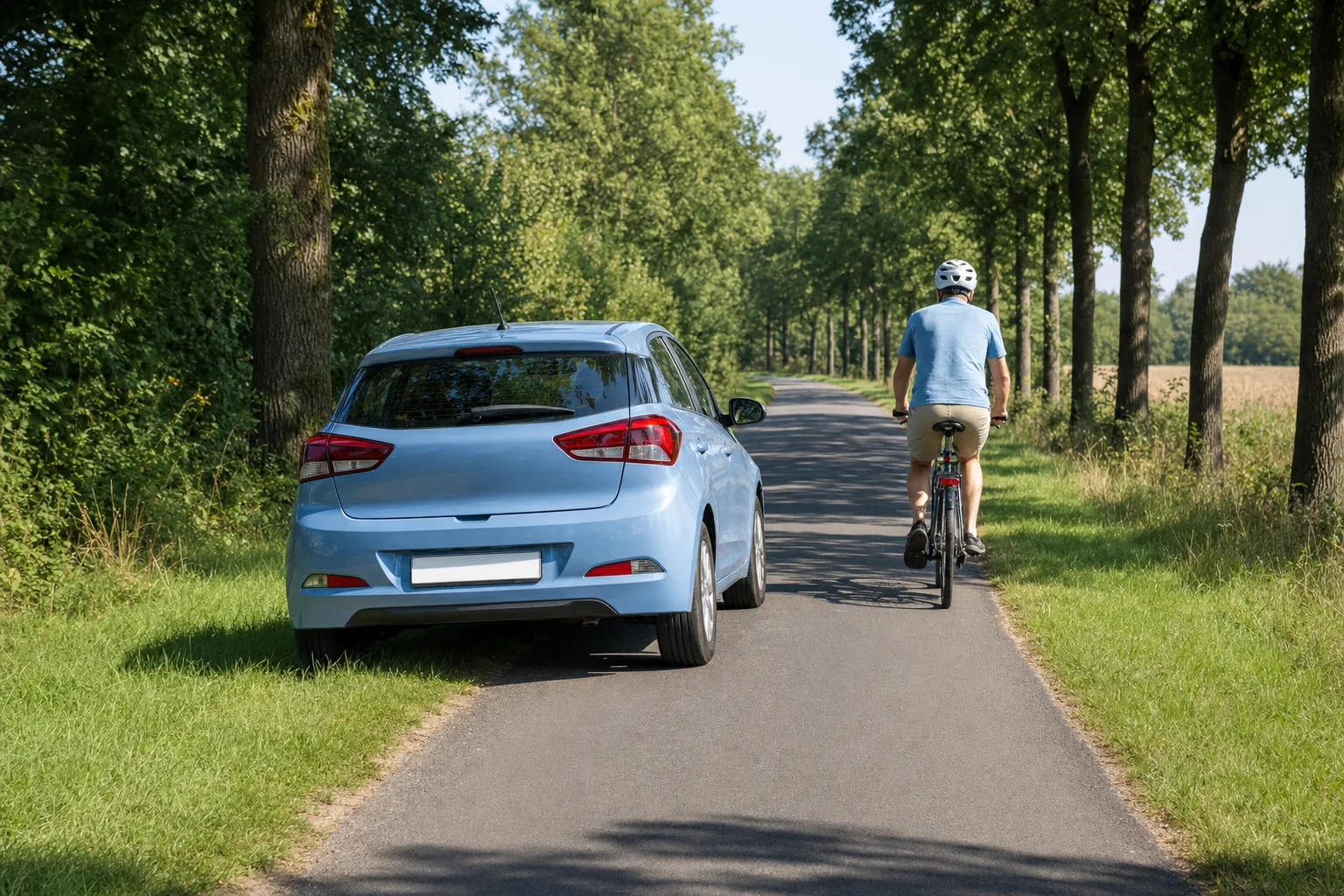
Always keep a sufficient lateral distance, especially with vulnerable road users: a pedestrian on the verge, a cyclist or a horse rider deserve a wider gap and a reduced speed.
Narrowing and obstacles: who gives way?
When an obstacle is in your lane (a parked vehicle, roadworks, a deposit) and forces you to encroach on the part of the carriageway reserved for oncoming traffic, it is you who must give way. The driver whose lane is clear does not have to move aside: they go first.
At some narrowings, signage settles the question directly. Sign B19  requires you to give way to drivers coming from the opposite direction, while sign B21
  gives you priority of passage over them. If nothing is signposted, the obstacle rule applies: the driver whose lane is blocked waits.
Difficult passing on a steep gradient
On a steeply sloping road where passing is difficult and one of the two vehicles has to reverse, it is in principle the driver going downhill who performs the manoeuvre and reverses. Why? Because a vehicle going uphill has far more trouble pulling away again on a slope, especially if it is heavily loaded. Having the descending vehicle reverse is therefore safer and simpler.
This rule has one logical exception: if the manoeuvre is clearly easier for the vehicle going uphill (for example because a passing place is just behind it), then it is that vehicle that gives way. Common sense and safety always come first.
Passing cyclists and long vehicles
- Cyclists and moped riders: give them room, slow down and remember that a gust of wind or a pothole can push them towards the centre of the carriageway. Be especially careful near cycle paths and verges.
- Long vehicles (lorries, buses, convoys): they take up a lot of width, especially in bends where the rear "cuts" the curve. Anticipate, slow down and, if space is tight, wait until they have passed before moving forward.
- Pedestrians without a pavement: on a country road, a pedestrian may walk along the edge of the carriageway. Reduce your speed and move over far enough when you pass them.
| Situation | Who gives way / what to do |
|---|---|
| Normal road, oncoming traffic | Each driver keeps to the right, slow down if narrow |
| Obstacle in your lane | You give way to oncoming traffic |
| Sign B19 facing you | You give way to vehicles coming towards you |
| Sign B21 facing you | You have priority of passage |
| Difficult passing on a steep gradient | The vehicle going downhill reverses |
Passing a tram and lateral clearances
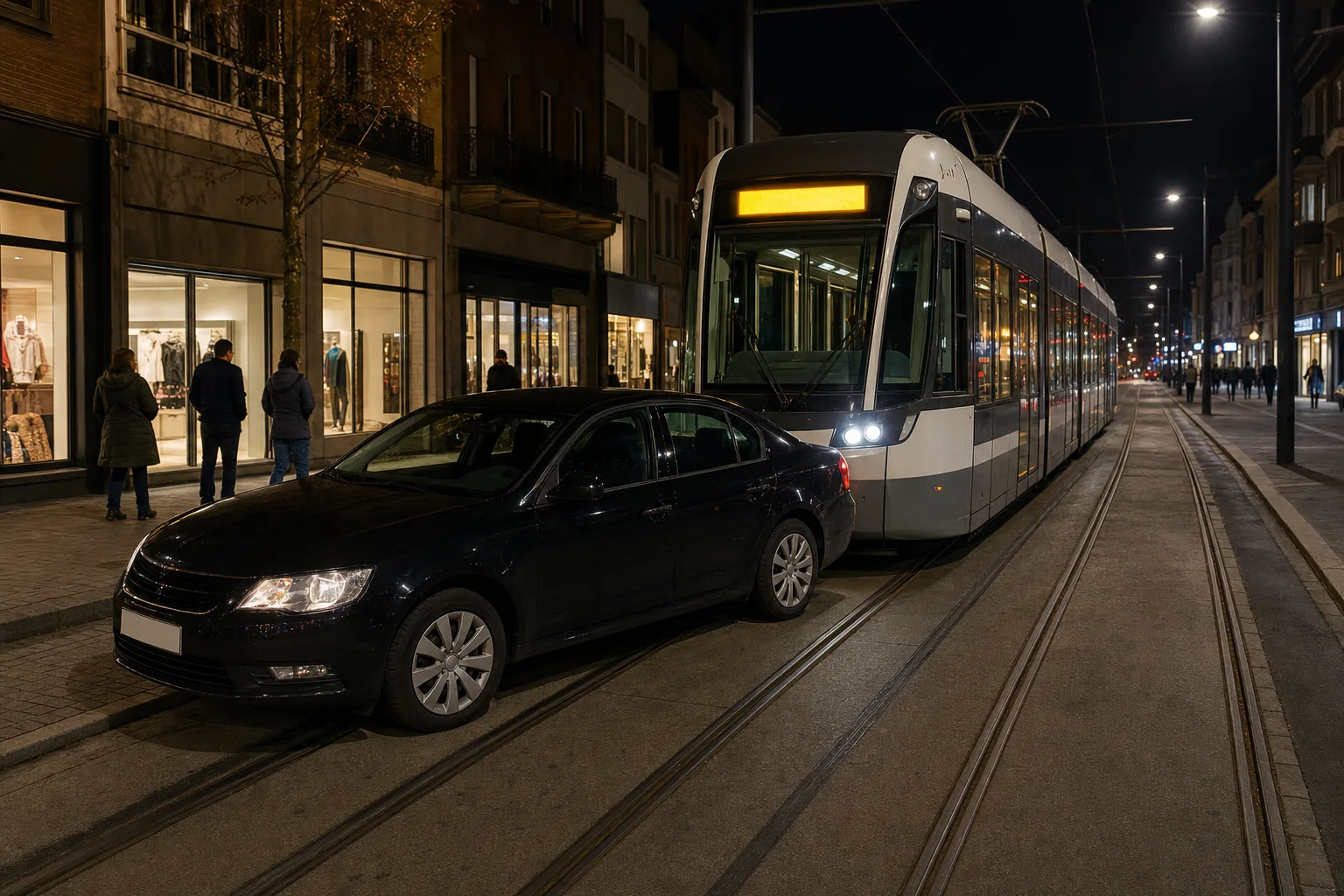
A tram is passed and overtaken on the right, in principle. This rule applies both when you meet it coming from the opposite direction and when you catch up with it: its path is fixed by the rails and it cannot move aside, so it is up to you to let it through and to travel on its right. Only exceptionally, when there is not enough room on the right, is passing or overtaking on the left tolerated.
With vulnerable road users (pedestrian, cyclist, moped rider), the law requires a minimum lateral distance when passing or overtaking them: at least 1 metre in a built-up area and at least 1.50 metres outside built-up areas. This gap gives the road user a safety margin if they are pushed off course by the wind, an obstacle or a defect in the carriageway.
| Location | Minimum lateral distance |
|---|---|
| In a built-up area | 1 metre |
| Outside built-up areas | 1.50 metres |
🧠 Check you've got it
Question 1 / 3
3 exam-style questions on this lesson — instant correction.
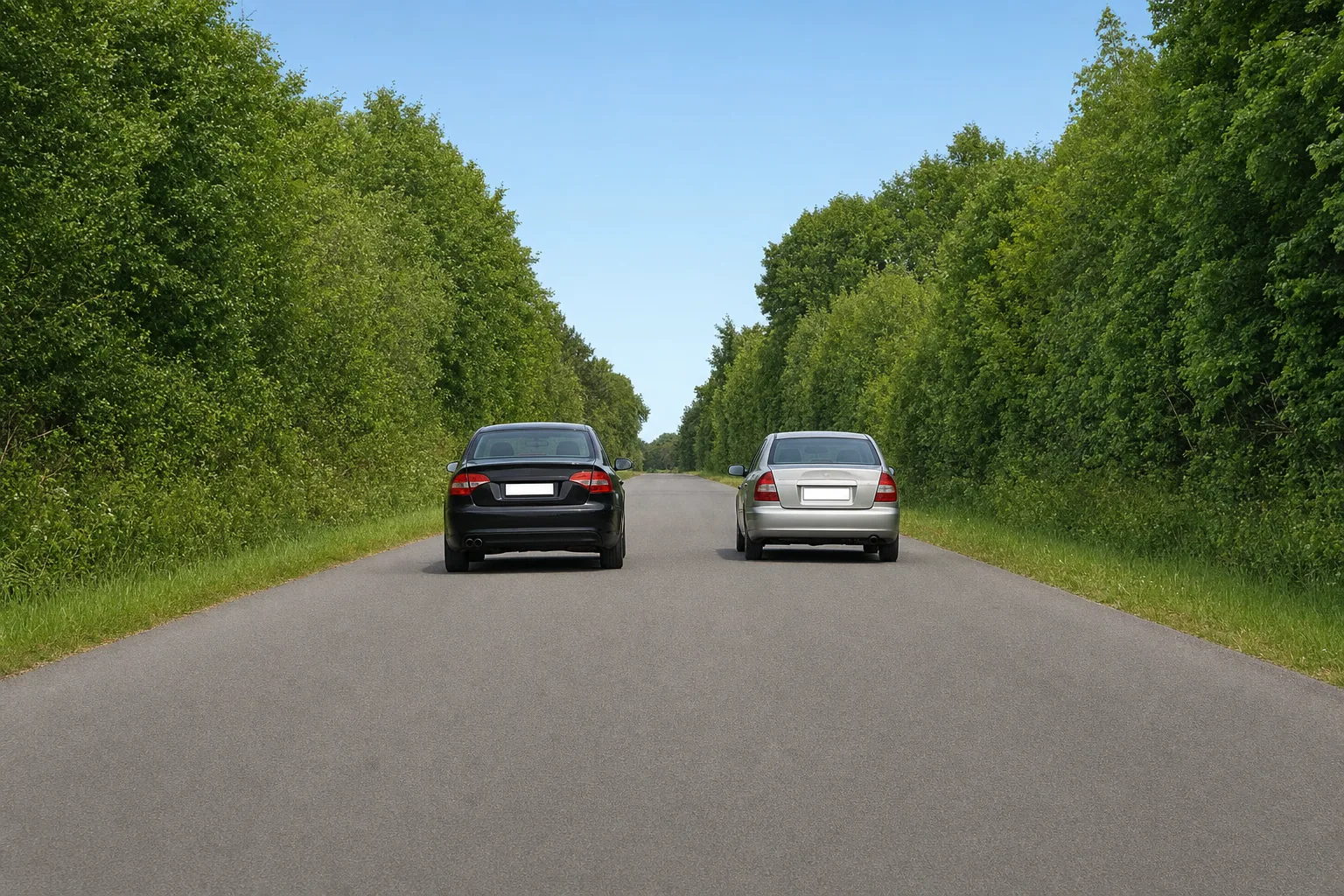
A carriageway without any markings. May the black car overtake the grey one on the left?
🚙Practise Overtaking and passing
Exam-style questions on this theme, with corrections and explanations — plus the full bank with access.
❓ Frequently asked questions
What is the difference between passing oncoming traffic and overtaking?
You pass a road user coming from the opposite direction, normally on the right. You overtake a road user travelling in the same direction as you, on the left. They are two distinct manoeuvres with different rules.
A car is parked on my side and blocks my lane. Who goes first?
Since the obstacle is on your side, you are the one who must give way. You wait until the vehicles coming from the opposite direction have passed before going around it, unless a B21 sign gives you priority.
On a narrow mountain road, who has to reverse?
In principle, the driver going downhill reverses, because a vehicle going uphill has more difficulty pulling away again. But if the manoeuvre is clearly easier for the one going uphill, it is up to them to give way. Safety comes first.
What should I do when I pass a cyclist on a narrow road?
Slow down, keep a good lateral distance and, if space is tight, wait for a wider spot. A cyclist can be pushed off course by the wind or a defect in the road: give them a margin.