⏱️ 4 min read
Drink-driving
A single drink is already enough to impair your reflexes, your vision and your judgement. In Belgium, driving with too much alcohol in your blood is not just a safety issue: it is a heavily punished offence, which can lead to a fine, loss of your licence or even prison. Here are the thresholds, checks and consequences you need to know for the exam and for the road.
📑 In this lesson (5)
The legal blood alcohol limits
Alcohol levels are measured in two ways: in the blood (in grams per litre, g/l) or in exhaled air (in milligrams per litre, mg/l). For an ordinary driver, the general limit is set at 0.5 g/l of blood, which corresponds to 0.22 mg/l of exhaled alveolar air. Above that, you are committing an offence.
For professional drivers (bus, coach, lorry, taxi, as well as certain passenger transport services), the threshold is lowered to 0.2 g/l of blood (i.e. 0.09 mg/l of exhaled air). Tolerance is therefore virtually zero for those who drive as part of their job.
Why alcohol is dangerous behind the wheel
Alcohol acts directly on the brain and impairs all the abilities needed for driving. Its effects often appear before you are aware of them: you feel fine while your abilities are already reduced.
- Slower reflexes: your reaction time gets longer, which greatly increases your braking distance.
- Impaired vision: your field of vision narrows ("tunnel" effect), and your perception of distances and adaptation to darkness deteriorate.
- Distorted judgement: you take more risks, overestimate your abilities and underestimate danger.
- Reduced coordination: your movements become less precise and your control of the vehicle decreases.
- Increased drowsiness: alcohol tires you out and encourages lapses in alertness, especially at night.
Checks: from the breath test to the blood sample
The police may check any driver. The check generally takes place in several stages:
- Breath test ("pre-test"): a device indicates a result by colour or by letter, without a precise figure.
- Breath analysis: if the pre-test is positive, an approved device measures the exact level in the exhaled air.
- Blood sample: possible if the breath analysis is impossible or contested. Its result is then decisive.
Refusing to take the test or the analysis is an offence in itself, punished in the same way as a high blood alcohol level.
Tiered penalties
The higher the level, the heavier the penalty. From 0.5 g/l, the police can impose an immediate driving ban (the vehicle stays where it is). Beyond fines, the court may impose a disqualification from driving (loss of your licence) and, for the highest levels or repeat offences, more severe penalties.
| Blood alcohol level | Main consequences |
|---|---|
| Less than 0.5 g/l (0.2 g/l for professionals) | Driving is allowed, but you still need to stay alert. |
| From 0.5 to less than 0.8 g/l | Fine and possible short-term driving ban. |
| From 0.8 g/l | Heavier fine, extended driving ban, possible disqualification. |
| Refusing the test / repeat offence | Aggravated penalties, disqualification and possible reinstatement tests. |
The right reflex
The only safe way to drive is to never mix alcohol and driving. Designate a sober driver (the "Bob"), plan for a taxi or public transport, or wait until the alcohol has been completely eliminated. If in doubt about your level, do not get behind the wheel: time remains the only effective remedy.
🧠 Check you've got it
Question 1 / 3
3 exam-style questions on this lesson — instant correction.
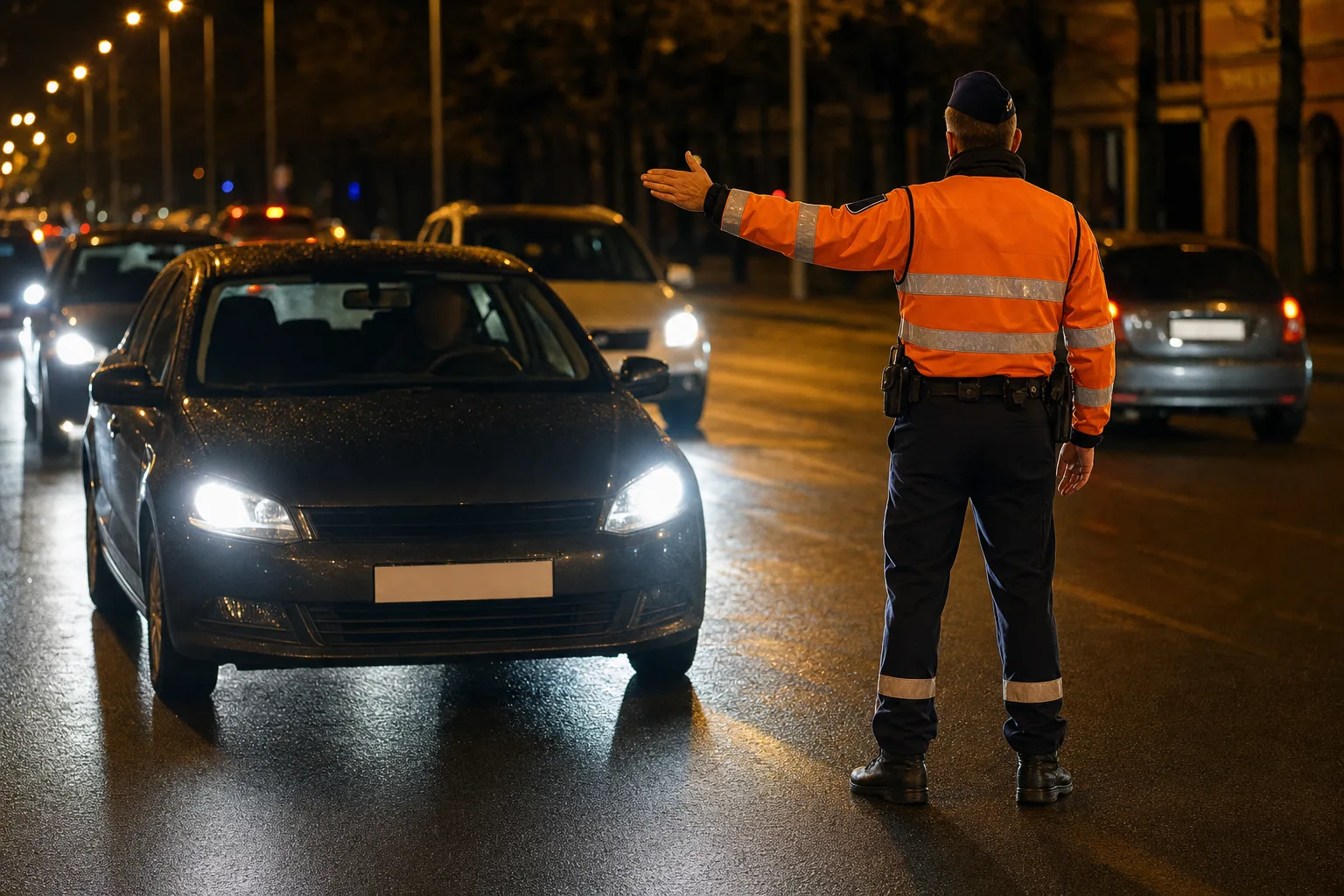
The saliva test comes back positive. How many hours of temporary driving ban are imposed on you immediately?
🍺Practise Driver fitness (alcohol, drugs, fatigue)
Exam-style questions on this theme, with corrections and explanations — plus the full bank with access.
❓ Frequently asked questions
How many drinks correspond to 0.5 g/l?
Impossible to say precisely: it all depends on weight, sex, age, whether your stomach is full or empty, and the type of drink. For many people, two drinks are already enough to approach or exceed the limit. The only way to be sure is not to drink before driving.
Does coffee or a cold shower lower your alcohol level?
No. No trick speeds up the elimination of alcohol. The liver breaks it down at a slow, fixed rate (about 0.1 to 0.15 g/l per hour). Only time lowers your level.
Can I refuse the breath test?
Refusing is an offence in itself, punished as severely as a high blood alcohol level. You risk a fine, a driving ban and disqualification from driving.
Can I still be over the limit the next morning?
Yes. As alcohol is eliminated slowly, heavy drinking in the evening can leave you over the limit the next day. Be wary of morning journeys after a boozy night.