⏱️ 4 min read
Drugs and medicines
Driving demands quick reactions and full mental clarity. Yet drugs and certain medicines reduce attention, lengthen reaction time and distort judgement. In Belgium the law is clear: for illegal drugs it is zero tolerance; for medicines, the driver remains responsible for their fitness to drive. Here is what you need to know to drive safely and pass the exam.
📑 In this lesson (4)
Why drugs and medicines are dangerous at the wheel

Good driving rests on three abilities: perceiving what is happening around you, deciding correctly and acting at the right moment. Drugs, like certain medicines, disrupt all three stages. They can cause drowsiness, blurred vision, deceptive euphoria, overestimation of your abilities or, on the contrary, slowed movements. The danger is all the greater because the driver is often unaware that their performance has dropped.
Illegal drugs: zero tolerance
Unlike alcohol, there is no tolerated threshold for drugs at the wheel. As soon as a prohibited substance is detected in the body, the offence is established, even if the driver feels perfectly capable of driving. This covers in particular cannabis (THC), cocaine, amphetamines and MDMA, as well as opiates (heroin, morphine).
Screening in three stages
During a check, the police generally proceed in stages:
- A standardised checklist: the officer observes outward signs (eyes, behaviour, speech) to detect probable use.
- The saliva test: a saliva sample allows the presence of drugs to be detected quickly.
- Lab confirmation : if the saliva test is positive, a saliva sample is sent to an accredited laboratory to confirm the offence. A blood test is only used if a saliva test is impossible.
Heavy penalties
Driving under the influence of drugs leads to an immediate driving ban (in practice for several hours), a substantial fine and a risk of disqualification from driving. In the event of reoffending or an accident, the penalties become much harsher. The combination of drugs + alcohol is punished particularly severely.
Medicines: read before you drive
Many commonly used medicines act on the nervous system: sleeping pills, tranquillisers, antidepressants, strong painkillers, certain antihistamines or cough syrups. They can cause drowsiness, reduced alertness, dizziness or vision problems. Taking a medicine is not forbidden, but driving while it reduces your fitness is.
Spotting a medicine that affects driving
Unlike France, Belgium does not use a coloured pictogram on the box. Here it is the package leaflet that informs you: read the « Driving and using machines » section before getting behind the wheel. If in doubt, ask your doctor or pharmacist — and note that an over-the-counter medicine can affect driving too.
A few common-sense rules
- Never combine medicines with alcohol: their effects reinforce each other dangerously.
- Respect the doses and the stated times; a sleeping pill taken at night can still be acting in the morning.
- At the start of a treatment, be especially careful: your body needs to adjust.
- At the slightest sign of drowsiness or dizziness, do not get behind the wheel.
🧠 Check you've got it
Question 1 / 3
3 exam-style questions on this lesson — instant correction.
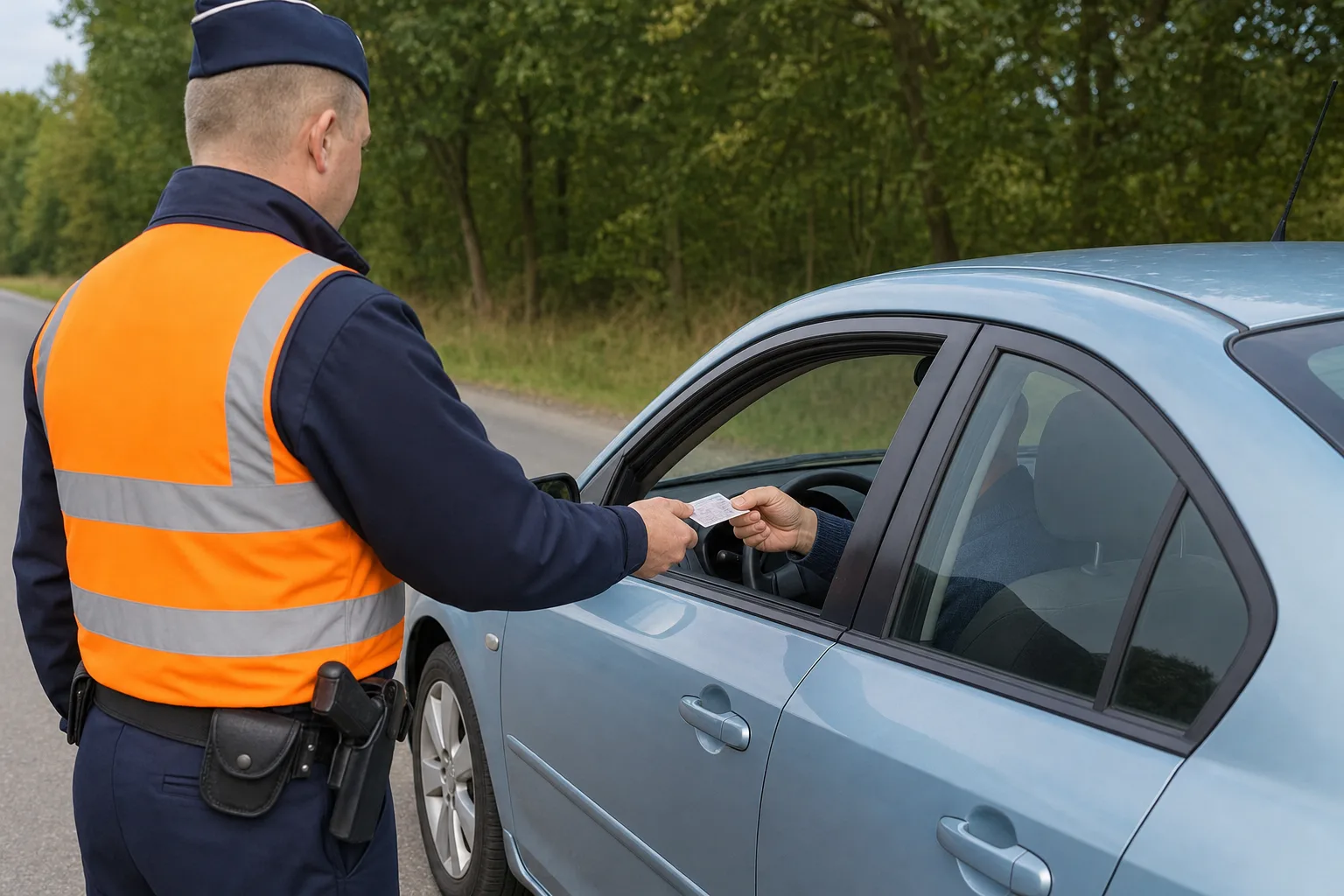
During a check, the police ask for the vehicle's registration certificate. In what form must this document be presented?
🍺Practise Driver fitness (alcohol, drugs, fatigue)
Exam-style questions on this theme, with corrections and explanations — plus the full bank with access.
❓ Frequently asked questions
Is there a tolerated threshold for cannabis at the wheel?
No. For illegal drugs, including cannabis, Belgium applies zero tolerance. As soon as a trace is detected, the offence is established, regardless of whether you feel fit to drive.
What happens if I refuse the saliva test?
Refusing screening without a valid reason is an offence punished in the same way as a positive test. Refusing is therefore never an advantageous option.
Can I drive after taking a prescribed medicine?
It depends on the medicine. Read the leaflet, « Driving and using machines » section. At the slightest doubt (drowsiness, vision, reflexes), ask your doctor or pharmacist before driving.
How do I know if my medicine affects driving in Belgium?
Read the leaflet, especially the « Driving and using machines » section. Unlike France, Belgium does not use a coloured pictogram on the box. If in doubt, ask your doctor or pharmacist.